AI Calling Campaigns
Automated calling system: the four types compared
An automated calling system can be a robocaller, an IVR, a dialer or an AI agent. What each does when a person answers, what the law says, and how to choose.
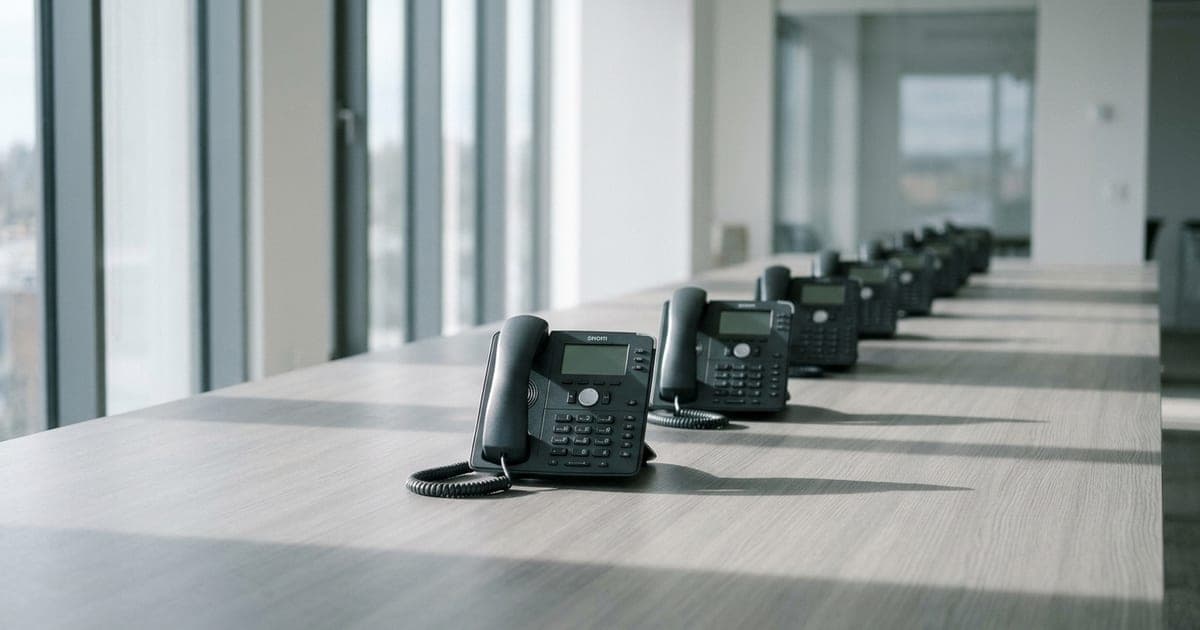
"Automated calling system" describes four different machines: voice broadcasting, IVR, dialers and AI voice agents. The quickest way to tell them apart is to ask what happens in the two seconds after a person says "hello". A broadcast plays a recording, a dialer looks for a free human, an IVR reads a menu, and an AI agent answers. Choose by that moment, then check the consent rules for the type you picked, because US and UK law treat recorded and AI voices more strictly than a human dialling by hand.
Most pages about automated calling systems list a dozen dialer types and a dozen use cases and leave you where you started. The categories overlap because vendors name them for marketing, not engineering. Underneath, there are only four designs, and they differ on one thing: who, or what, speaks when the person answers.
The four types, by what happens at "hello"
| Type | What it does | What the person hears at pickup | Good for | Weak at |
|---|---|---|---|---|
| Voice broadcasting | Dials a list and plays a recorded message | A recording, sometimes with "press 1" | Emergency alerts, school closures, one-way notices | Anything that needs a reply |
| IVR (inbound or outbound) | Menus driven by keypress or simple speech | "Press 1 to confirm, 2 to cancel" | Confirmations, routing, payment by keypad | Questions the menu didn't anticipate |
| Dialers (power, progressive, predictive) | Dials through a list and connects answered calls to human agents | A human agent, or silence while the system finds one | Sales and collections teams with staff | Small teams; abandoned calls when agents are busy |
| AI voice agent | Dials, speaks, listens, answers and records an outcome | A conversational voice that introduces itself as an AI | Reminders, follow-ups, win-back, retention, qualification | Negotiation, complex complaints, anything needing judgement you haven't written down |
There's a fifth thing that sometimes gets called an automated calling system: the inbound side, where software answers calls to your number. That's an AI receptionist or answering service, and it's a separate buying decision. This article is about calls you place.
The two seconds that decide the design
The US Telemarketing Sales Rule has a provision that explains why dialers behave the way they do. Under the FTC's Telemarketing Sales Rule guidance, a call counts as abandoned if a live person answers and no sales representative connects within "two seconds of the person's completed greeting". The safe harbour allows no more than three percent of answered calls to be abandoned per campaign, and unanswered calls must ring for 15 seconds or four rings before the system gives up.
A predictive dialer dials more numbers than it has agents, betting that most won't answer. When the bet goes wrong, someone says "hello" to silence, and the system has two seconds to find an agent or play a message. That's the dead air most people associate with sales calls, and it's why so many hang up on a pause.
An AI voice agent removes the bet. There's no pool of agents to run out of, so every answered call is answered by the same thing that will hold the conversation. The remaining engineering problem is latency: the gap between pickup and the first word has to be short. In an October 2026 pilot we ran for an online casino operator, keeping the pause after pickup under a second was one of the lessons we wrote down, because a silent line reads as a robocall. The longer comparison is in predictive dialer vs AI voice agent.
What the law says about each type
This is the part most automated calling guides skip, and it's the one that decides which type you're allowed to use. As of October 2026:
The US autodialer definition got narrower, but that doesn't help AI calls. In Facebook v. Duguid, decided on 1 April 2021, the Supreme Court held that to count as an "automatic telephone dialing system" under the TCPA, equipment must be able to store or produce numbers "using a random or sequential number generator". Many modern dialers that call from a stored customer list fall outside that definition. But the TCPA also restricts calls using "artificial or prerecorded" voices, and on 8 February 2024 the FCC ruled that AI-generated voices are "artificial" under the Act. So the autodialer question matters less for AI calls than people hope: the voice itself brings the call under the consent rules, and telemarketing calls with it need prior express written consent.
Prerecorded sales calls need a signed agreement. The same FTC guidance says prerecorded telemarketing requires the seller's "prior signed, written agreement", plus an automated opt-out announced at the start that adds the number to the seller's do-not-call list. Calls are limited to 8am to 9pm local time, and lists must be scrubbed against the National Do Not Call Registry at least every 31 days.
UK automated calls need specific consent. The ICO's telephone marketing guidance says consent for automated marketing calls "must specifically cover automated calls", that every automated call must include your name and a contact address or freephone number, and that your number must be displayed.
Informational calls are different from sales calls. A reminder of an appointment someone booked isn't telemarketing in the way a discount offer is, and the rules reflect that. Be honest with yourself about which one a given call really is: "reminder" calls that end with an upsell are sales calls, and the AI sales calls playbook applies to them.
This isn't legal advice. It's a summary of published US and UK guidance as of October 2026. Your obligations depend on where the people you call live, what the call is for, and what they agreed to. The AI phone call laws article goes further, and your counsel should approve the consent wording you collect.
Answer rates set the economics, not the software
Pew Research Center found in a July 2020 survey of 10,211 US adults that eight in ten don't generally answer their mobile when an unknown number calls, and 67% said they don't pick up but do check any voicemail left. That's old data and the exact shares will have moved, but the shape holds: most first attempts on any list ring out. Three practical consequences:
- Retries matter more than dial speed. Two attempts a few hours apart reach people the first attempt missed. Dial Milo's default is two attempts per person.
- Callbacks are part of the campaign. People ring back numbers that just called them, sometimes hours later. If your system treats those as random inbound calls, you lose the conversation. Dial Milo recognises a returning caller, thanks them for calling back, confirms who they are and carries on with the campaign. Unknown callers hear a neutral line that doesn't name your business.
- Voicemail is a policy decision. Pew's 67% suggests a message gets heard. But a recorded message naming your brand and offer can be heard by anyone with access to the phone. For reminders that's fine. For sales, retention and anything sensitive, Dial Milo detects answering machines (carrier detection plus the AI listening for a voicemail greeting) and hangs up without leaving the brand, then retries.
That last point came straight out of the pilot: carrier voicemail detection alone mislabelled some voicemail greetings as people, so the AI has to listen for them too.
What an automated calling system costs
Pricing follows the design:
| Type | Typical pricing model | What drives the bill |
|---|---|---|
| Voice broadcasting | Per message or per minute | List size |
| IVR | Platform fee plus minutes | Call volume and menu complexity |
| Dialer | Per agent seat per month plus minutes | Headcount, mostly |
| AI voice agent | Per minute | Answered talk time |
Dial Milo is pay as you go, with no subscription and top-ups from $10. An outbound call is the phone line plus the AI. The line is priced for the exact number dialled and your caller ID country, billed per started minute: US landlines and mobiles from 4¢, a UK mobile from a UK number 8.5¢, a Netherlands mobile 10¢. The AI is 9.57¢ per talk minute on top. For US, UK and Dutch numbers that's roughly 14–20¢ a minute all in, and calls that don't connect have no minute charge. Look up any number on the rates page.
Worked example (illustrative figures). A dental group sends 600 reminder-and-rebook calls a month to US patients. Assume 45% answer (people expecting a reminder answer more often), average talk time 1.5 minutes, so the line bills 2 started minutes:
- Line: 270 × 2 × 4¢ = $21.60
- AI: 270 × 1.5 × 9.57¢ = $38.76
- Short connections to voicemail, allow $8
- Total: about $68 a month, or roughly 25¢ per answered patient
A dialer for the same job would need a person on the other end of every answered call. That's the real comparison: not software price against software price, but software price against the staff time the type assumes. More reminder detail is in automated appointment reminder calls.
Choosing a system: the checklist
- 1
Decide who speaks at pickup
If every answered call needs a trained human, you want a dialer. If the call is one-way, broadcasting or IVR. If the conversation is routine but two-way, an AI agent.
- 2
Classify the call honestly
Informational, or sales? Then check the consent you actually hold for that class of call, in each country you'll dial.
- 3
Check local-time calling
The system should call each person in their own time zone, not yours. Dial Milo works this out from a timezone column or the phone number and calls only within your hours (10:00 to 20:00 by default) where the person lives.
- 4
Check the stop controls
Opt-out recorded during the call, a do-not-call list that applies across every campaign, a contact cooldown so nobody is called twice in a few days, pause that doesn't cut off live calls, and a budget cap.
- 5
Check what you get back
A recording and transcript are the minimum. You want a structured outcome per call (accepted, declined, callback requested with a time, opted out, wrong person) that your CRM can act on.
- 6
Hear it before you pay
Dial Milo has a browser demo where Milo calls you in the browser. Interrupt it, ask something off-script, say "stop calling me". How it handles those three tells you more than any feature list.
Where automated calling is heading
The direction is clear enough: dialling was automated decades ago, menus followed, and conversations are next. That doesn't make every call a candidate. Negotiation, complaints with history, and anything where a mistake costs real money still belong with people, and a well-run call centre automation project keeps that line explicit. What's changed is that the routine half of outbound calling, the reminders, confirmations, follow-ups and check-ins, no longer needs anyone to sit and dial. If one of those is on your list this month, the calling hours and contact limits guide is the place to start setting it up.
Frequently asked questions
- What is an automated calling system?
- Any software that places or handles phone calls without a person dialling each one. The term covers four quite different things: voice broadcasting that plays a recorded message, IVR menus that route callers by keypress or speech, dialers that call through a list and connect answered calls to human agents, and AI voice agents that hold the conversation themselves.
- Are automated calling systems legal?
- Yes, for the right calls with the right consent. In the US, the FTC's Telemarketing Sales Rule requires a signed written agreement before prerecorded sales calls and limits calling to 8am to 9pm local time, and the FCC ruled in February 2024 that AI-generated voices count as artificial voices under the TCPA. In the UK, ICO guidance says automated marketing calls need consent that specifically covers automated calls. Informational calls such as appointment reminders are treated differently from sales calls. This isn't legal advice.
- What's the difference between an auto dialer and an AI calling system?
- An auto dialer automates the dialling and hands answered calls to a human agent, or plays a recording. An AI calling system also automates the conversation: it speaks, listens, answers questions and records an outcome. The dialer saves agents' time; the AI agent replaces the need for an agent on routine calls.
- How much does an automated calling system cost?
- Dialers are usually priced per agent seat per month plus call minutes. AI calling systems are usually priced per minute. Dial Milo is pay as you go: the phone line is priced for the number you dial, from 4 cents a minute for US numbers, plus 9.57 cents per AI talk minute, with no subscription and no minute charge for calls that don't connect.
- Should an automated system leave voicemails?
- It depends on the call. A pharmacy reminder can reasonably leave a message. A sales or retention call usually shouldn't, because a recorded message with your brand on it can be heard by anyone with access to the phone. Dial Milo detects voicemail and hangs up without leaving the brand, then retries later.
Keep reading
AI Calling Campaigns
Predictive dialer vs AI voice agent: which to use
Predictive dialer or AI voice agent? How pacing and abandoned calls work, the 3% rule, what each costs per conversation, and which campaigns suit which tool.
ReadAI Calling Campaigns
Call center automation: what to automate first
Call center automation without the hype: which inbound and outbound calls to hand to AI first, what customers object to, the costs, and a 30-day rollout plan.
ReadAI Calling Campaigns
Automated appointment reminder calls that cut no-shows
What research says about automated appointment reminder calls, why staff calls still win, and how a two-way AI reminder call can close the gap for cents each.
Read