Answering Service
Locksmith answering service for lockouts
Lockouts are speed-to-answer races. How a locksmith answering service picks up first, captures lock type and car make, filters spam, and bills per minute.
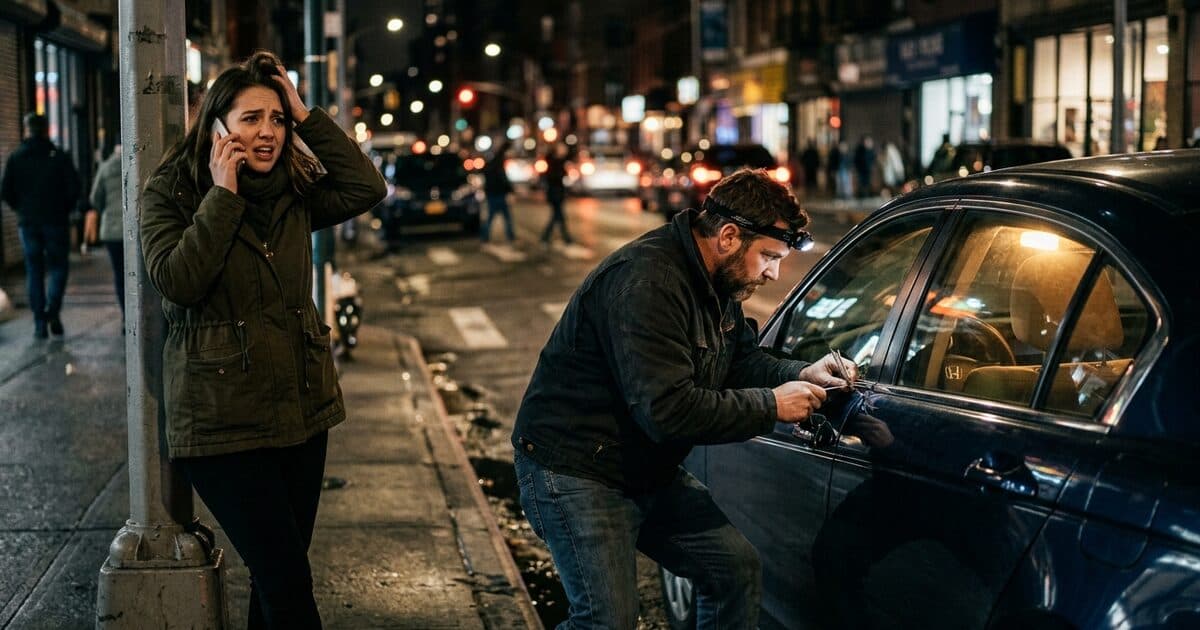
Locksmithing is the purest speed-to-answer trade there is. A lockout caller phones down the list and books the first voice that picks up — no voicemail, no callback, no second chance. A locksmith answering service earns its keep by answering in seconds at 3am, capturing enough detail that you ring back with a quote instead of questions, and screening the spam and bait calls this trade attracts.
Most trades have a mix of urgent and routine calls. Locksmithing barely does. The dominant call type is the lockout — house, flat, car — and the lockout caller is standing outside, often late, always impatient. Their behaviour is completely predictable: search "locksmith near me," tap the first number, and if it rings out, tap the next. The whole job is decided in about twenty seconds, and it goes to whoever answered.
You cannot be that person reliably. You are on another job, hands on a lock, or asleep — and lockouts peak exactly then. So the entire question is what answers in your place, and whether it answers well enough to hold a caller who has three more numbers ready to dial.
The lockout is a race down the list
There is no loyalty in a lockout call and no patience. The caller does not compare reviews while standing on the pavement; they book the first business that sounds like it can be there within the hour. A standard residential lockout bills $100–200, an auto lockout similar, out-of-hours more — and the deciding factor is almost never price. It is who picked up.
That makes the economics unusually clean. The call that wins the job lasts two or three minutes and costs about 12–18¢ at pay-as-you-go rates. Missing it costs the whole job. A locksmith answering service is not competing against a receptionist's salary here; it is competing against the phone ringing out.
What a lockout call sounds like
A call at 11:50pm, while you are asleep:
Milo: Redline Locksmiths — this is Milo. How can I help?
Caller: I've locked myself out of my car. The keys are on the seat. How fast can someone get here?
Milo: I can get that moving now. First — where are you, exactly? A street address or a landmark.
Caller: The car park behind the Crown Hotel on Marsh Street.
Milo: Got it. What's the make and model of the car?
Caller: A 2019 Honda Civic.
Milo: And your name and a callback number?
Caller: Tom Reilly, this number.
Milo: Thanks, Tom. 2019 Honda Civic, keys locked inside, Crown Hotel car park on Marsh Street. I'm alerting the on-call locksmith now — he'll call you straight back with a time and a price before he sets off.
You wake — or stay awake for thirty seconds — to a text with the location, the car, and the caller's number. You ring back with a quote and an ETA instead of a blank "someone called about a lockout." The caller stayed on the line because every question had a point and the whole thing took ninety seconds.
24 hour locksmith answering service economics
Locksmithing is a genuinely round-the-clock trade in a way most are not. Lockouts do not respect business hours; a meaningful share of the best-paid calls arrive between 10pm and 6am, plus the weekend surge. A 24-hour answering service is therefore not an upgrade tier for a locksmith — it is the core product.
This is exactly where traditional human answering services sting the trade: nights and weekends are commonly loaded on top of a $250-plus monthly minimum, so the hours producing your most valuable calls cost the most to cover. Per-minute billing is flat around the clock — the 3am lockout costs the same per minute as the 3pm rekey enquiry, and quiet nights cost nothing.
Emergency locksmith answering: urgent, but not identical
Nearly every call is urgent, but urgent is not uniform, and a good emergency locksmith answering setup still triages:
- Lockout, property secure — the standard race call: capture location, lock or car details, alert you immediately
- Lockout with a safety edge — child or pet locked inside, vulnerable person outside in the cold: escalate hard and fast, no booking small talk first
- Break-in damage — door or lock forced: urgent, but the caller also needs telling to speak to the police and their insurer before work starts; capture everything and get you on the phone
- Rekey and lock-change quotes — urgent to the caller, bookable for you: capture the door count and lock types, book the visit
The difference between these is the difference between waking you for a rekey quote and letting a toddler-in-the-car call sit in a message queue. Test it in both directions before you trust it.
Capture enough to quote on the callback
Locksmith callbacks convert far better when you ring back already knowing the job. The intake list that makes that possible:
- Exact location, with access notes — car park, flat number, which entrance
- Callback number, read back to confirm
- What they are locked out of — house, flat, car, office, safe
- The hardware — lock brand or type if they know it, car make and model for auto work, whether a key snapped in the barrel
- The constraint — "need to leave for work at 7" changes the quote and the ETA you offer
A message with all five is a job you can price in one phone call. A message that says "lockout, call back" is a race you have already half lost.
Spam and bait calls are a real cost in this trade
Locksmithing has a specific junk-call problem. The trade's history of fake local listings and lead-reselling means the line attracts bait calls — people fishing for a phone quote to beat down, resellers testing prices — on top of the usual robocall share every business line gets. On a human answering service with per-call or per-minute billing, you are paying a loaded night rate for a salesperson's pitch.
Filtering matters twice over here: the junk should never reach you, and it should never cost you. Anything you evaluate should screen spam and not bill for it — and you should test that, not take it on faith. The pricing-model comparison, including how per-minute billing treats junk calls, is in answering service cost.
What to test before signing
- 1
Call it locked out, in a hurry
“I'm locked out of my house, how fast can someone come?” Does it capture location and lock details and alert you, or stall? A real lockout caller gives you twenty seconds — the service has to work at that speed.
- 2
Call it with an auto lockout
Give a make and model. The intake should use it — a Honda Civic and a Range Rover are different jobs, and the message should reflect that.
- 3
Call it with a rekey quote
“Just moved in, how much to change three locks?” The right answer captures door count and lock types and books a visit. The wrong answer invents a price you never authorised.
- 4
Feed it a spam call
Confirm it screens the junk and that you are not billed for it. Over a year this is a real, quiet saving.
What this costs in practice
Dial Milo answers in seconds around the clock, captures the location and hardware details that let you quote on the callback, texts you the moment a lockout comes in, and screens spam without billing you for it. Billing is per second of answered call time — roughly 6¢ a minute on a US number — with no subscription, no minimum, and no charge for missed, blocked or spam calls. Forward your existing number free, or take a dedicated one for $3 a month. New accounts start with a $1 trial credit, about 16 minutes of answered calls, so you can test it against a real lockout script tonight.
Sixty answered calls a month at ninety seconds each: about $5.50. One recovered midnight lockout pays for months of that. The same speed-to-answer logic applied to a trade with more routine calls is in the after-hours answering service article.
For your business
Don't lose another $2,000 emergency to voicemail.
Milo picks up while you're on a roof, under a sink, or driving between jobs. She screens emergency vs scheduled, captures the address and callback number, and texts you the moment something's on fire — literally or otherwise.
Get Milo answering your trades lineFrequently asked questions
- Why do locksmiths miss so many lockout calls?
- Because the caller never waits. Someone locked out of their house or car phones down the search results and books the first locksmith who picks up — they do not leave voicemails. If you are on a job, on a ladder, or asleep, that call is gone in twenty seconds, and you never find out it existed.
- What should a 24 hour locksmith answering service capture on a lockout call?
- Exact location including access notes, callback number read back to confirm, what they are locked out of — house, flat, car — and the details that change the job: lock type or brand if known, car make and model for auto lockouts, whether a key snapped in the lock. Capture that and you ring back with a real quote instead of questions.
- What does a locksmith answering service cost?
- Human services typically start around $250 a month with a minimum you pay whether the phone rings or not, and usually load nights and weekends — which for a locksmith is most of the valuable call volume. Pay-as-you-go AI services bill per answered minute with no minimum: at Dial Milo's published ~6¢/min, sixty 90-second calls a month costs about $5.50, and one $120 lockout covers months of service.
- Can an answering service filter the spam and bait calls locksmiths get?
- It should, and this matters more in locksmithing than almost any trade — the sector attracts fake-listing and bait calls, plus the usual sales robocalls. A proper service screens junk before it reaches you and does not bill you for it. Ask any service you evaluate how it handles spam, and whether those calls cost you money.
- Is emergency locksmith answering worth it at 3am?
- The 3am calls are often the most profitable a locksmith gets: lockouts at unsociable hours carry premium rates and zero price-shopping, and the caller books whoever answers. A per-minute service costs the same at 3am as at 3pm and nothing on quiet nights — so the economics hinge entirely on whether it actually answers fast and captures the job properly.
Keep reading
Answering Service
24 hour answering services: what you're buying
What round-the-clock call answering really covers, the three levels of 24/7 providers conflate, and how to tell whether you need overnight cover.
ReadAnswering Service
After hours answering service: what to know
What an after hours answering service costs, what happens to your 9pm callers without one, and how to choose between forwarding, a human service and AI.
ReadAnswering Service
Answering service cost: what you'll actually pay
What answering services really cost: a receptionist at $3,000–4,000 a month, traditional plans from $250 plus overages, or pay-as-you-go AI at cents a minute.
Read