Answering Service
Real estate answering service for agents
How a real estate answering service captures buyer calls while you are at a closing: showings booked live, seller leads logged, weekends covered.
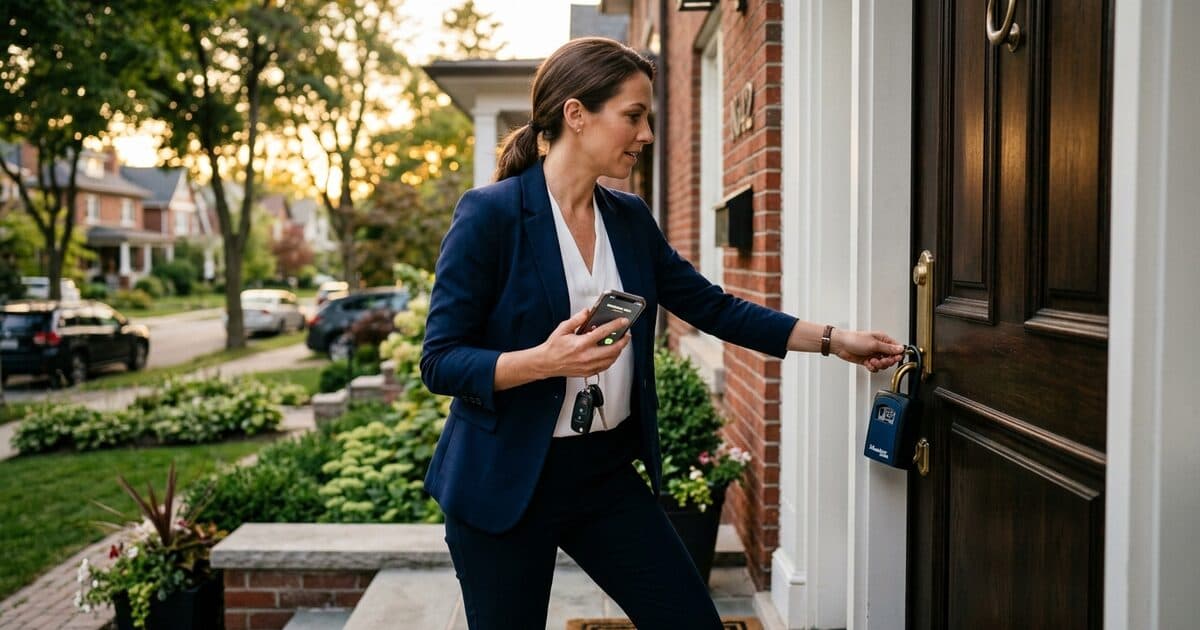
A real estate answering service exists for one moment: a buyer calls about a listing while you are at a closing, in a showing, or driving. That buyer calls the next agent on the portal within minutes, so the service has to do more than take a message. It should book the showing into your calendar on the spot and text you a summary you can act on between appointments.
An agent's phone is the whole business, and it rings at exactly the times an agent cannot pick up. Showings, closings, listing appointments, driving between all three. The caller on the other end is usually a buyer standing in front of a yard sign or scrolling a portal at 9pm, and they have four other agents' numbers on the same screen.
Voicemail does not lose you the call politely. The buyer hangs up, taps the next agent, and books with whoever answers. You never learn the call happened.
The calls an agent's phone actually gets
Three types, and they want three different responses:
Buyers about a listing. Speed is everything. They want a showing time or an answer about the property, and they want it now. The right outcome is a booked slot on your calendar, or a specific answer from the listing details, with their number captured either way.
Sellers testing the water. "What do you think our place on Elm is worth?" This is the most valuable call an agent gets, and it deserves the slowest intake: address, timeline, whether they are talking to other agents, when you can call back properly. Speed matters less than not fumbling it.
Tenants and vendors. If you manage rentals, maintenance calls need triage rules, not showing bookings. If you do not, these calls need a polite short path out. Either way they should not crowd out the first two.
What a booked call sounds like
Saturday, 10:40am, while you are mid-showing across town:
Milo: Harper Realty, this is Milo. How can I help?
Caller: Hi, I'm calling about the two-bed on Maple Street. Is it still available?
Milo: It is. It's listed at $349,000, two beds, one and a half baths, with a parking space. Would you like to see it? I can book a showing with Sarah.
Caller: Yeah, maybe this weekend?
Milo: Sarah has Saturday at 2:15 or Sunday at 11:30 open. Which works?
Caller: Saturday.
Milo: Done, Saturday at 2:15, 18 Maple Street. Can I take your name and a number for the confirmation text?
Caller: Dana Reyes, this number.
Milo: Booked, Dana. You'll get a text in a moment, and Sarah will have your details.
You finish your showing to a text with the name, number, slot, and what they asked about. No phone tag, no lost lead, no Sunday-night voicemail backlog.
Weekends are your business hours
Buyers call when they are off work, which means Saturday and Sunday carry a disproportionate share of your inbound. This collides directly with how traditional answering services bill: human services commonly load evenings and weekends on top of a monthly minimum around $250, so you pay a premium for the hours that matter most to you.
An after-hours answering service that bills per answered minute costs the same on Sunday at 7pm as Tuesday at 10am, and costs nothing during the quiet stretches. For a business whose demand is weekend-shaped, the billing model matters as much as the answering quality.
Realtor answering service or an inside sales agent?
The classic fix is hiring an ISA to work the phones. A full-time inside sales agent runs $40,000–50,000 a year plus commission in a typical US market, and they still cannot cover 9pm Sunday or two calls at once. For a team doing real volume, that hire makes sense alongside automation. For a solo agent or a two-person shop, the math usually does not: you would be paying ISA money to cover what is often twenty to sixty short calls a week.
The practical split many agents land on: an answering service handles first response, booking, and capture around the clock, and the ISA (or you) works the callbacks that deserve a human.
Do not lose the Spanish-speaking buyer
In most US metros a meaningful share of buyer calls start in Spanish. If your phone handling answers English-only, those buyers go to the agent whose line does. A bilingual answering service that greets the caller in their own language from the first second keeps them; human bilingual coverage carries a per-language premium, while AI handles additional languages at the same per-minute rate.
What to test before signing
- 1
Call as a buyer about a real listing
Ask about price and a showing. You want a correct answer from your listing details and a booked slot, not a promise that someone will call back. Time how long the whole call takes.
- 2
Call as a seller
“I'm thinking of selling my place, what's it worth?” Check what gets captured: address, timeline, callback window. If the intake is the same shallow message a buyer gets, seller leads will leak.
- 3
Call on a Saturday night
This is when your buyers call. Whatever latency or coverage limits exist will show up here, not in the Tuesday-morning demo.
- 4
Read the summary you would receive
Name, number, property, outcome, next step. If you could not act on it from your car between showings, it is not good enough.
What this costs in practice
Dial Milo books showings straight into your calendar, answers listing questions from the documents you upload, separates seller leads for proper callbacks, and speaks the caller's language from the first second. Billing is per second of answered call time, roughly 6¢ a minute on a US number, with no subscription and no charge for missed, blocked or spam calls. Fifty two-minute buyer calls a month costs about $6.10. One recovered showing that turns into a $350,000 sale pays for decades of that.
The $1 trial credit on a new account covers about 16 minutes of real answered calls, which is enough to run the four tests above with your own listings.
For your business
The Zillow lead that called while you were at a showing — caught.
Speed-to-lead wins listings. Milo answers in one ring, qualifies the buyer (timeline, prequal, property), books the showing, and texts you the second a ready-to-buy hits the line.
Get Milo answering your real estate lineFrequently asked questions
- Should a real estate answering service book showings directly?
- Yes, if it can see your calendar. A buyer call that ends in a confirmed showing is worth far more than one that ends in a message, because the buyer keeps scrolling until someone gives them a time. The service should check your real availability, book the slot, and text both sides a confirmation.
- What should it do differently with a seller lead?
- Slow down and capture more. A seller asking about a valuation is a listing appointment in the making, so the intake needs the property address, their timeline, whether they are interviewing other agents, and a good callback time. A buyer gets speed; a seller gets depth. A service that treats both identically wastes one of them.
- Can it answer questions about a specific listing?
- If you can upload documents, yes. Price, square footage, parking, HOA fees, open-house times: anything you put in the knowledge base gets answered consistently, in the caller's language. What it should never do is invent an answer. If a question is not in your documents, the right behaviour is taking a message, not guessing.
- What about tenant maintenance calls if I manage rentals?
- That is a different script entirely, and a decent service lets you treat it as one. Tenant emergencies need triage and escalation rules, not showing bookings. A property management answering service is built around exactly that call flow.
- What does a real estate answering service cost?
- Human services typically run $250 a month and up with included-minute bundles, and they often load evenings and weekends, which is when your buyers call. Pay-as-you-go AI bills per answered minute with no minimum: at Dial Milo's published ~6¢/min, fifty two-minute calls a month costs about $6.10.
Keep reading
Answering Service
Bilingual answering service without the premium
Why 'press 2 for Spanish' loses callers, what a bilingual answering service must actually do, and how to cover 6+ languages with no per-language surcharge.
ReadAnswering Service
After hours answering service: what to know
What an after hours answering service costs, what happens to your 9pm callers without one, and how to choose between forwarding, a human service and AI.
ReadAnswering Service
Answering service cost: what you'll actually pay
What answering services really cost: a receptionist at $3,000–4,000 a month, traditional plans from $250 plus overages, or pay-as-you-go AI at cents a minute.
Read