Answering Service
Veterinary answering service for busy clinics
How a veterinary answering service handles the worried 9pm pet owner: calm triage, booked appointments, escalation for real emergencies — about 6¢ a minute.
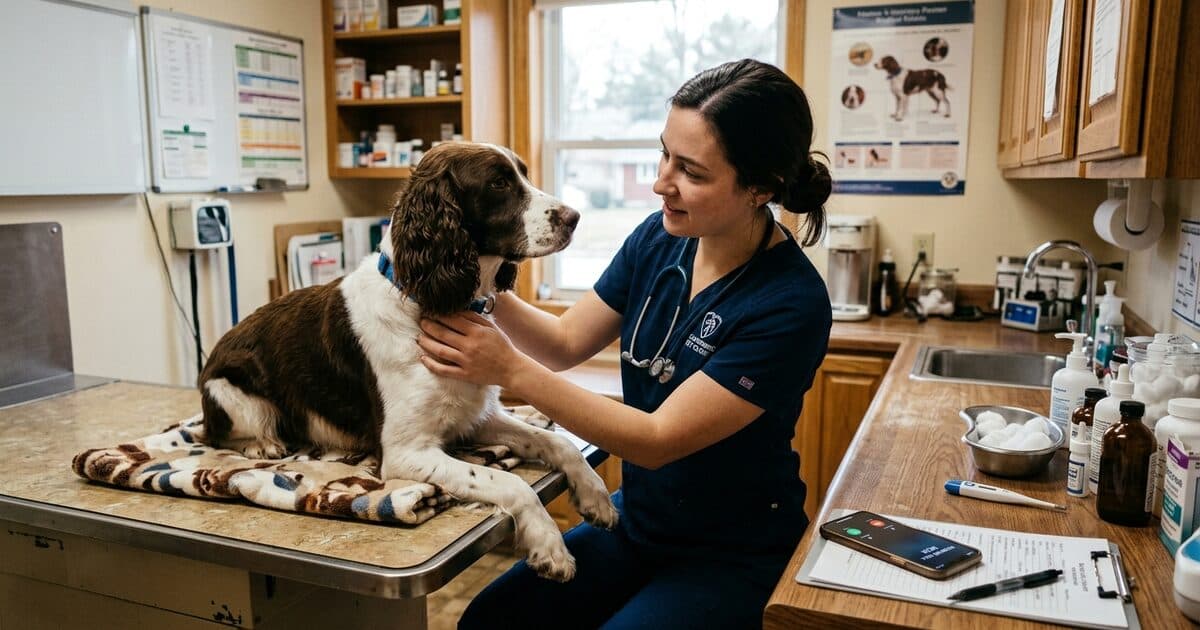
A veterinary answering service has one job that matters more than all others: the worried owner at 9pm whose dog ate something. Get that call right — calm triage, details captured, the on-call vet alerted or the emergency clinic named — and the routine appointment booking it does all day is a bonus. The cost is about 6¢ per answered minute; the alternative is an owner who finds another clinic while yours is elbow-deep in surgery.
Vet clinics miss calls for the best possible reason: everyone is with an animal. The receptionist is checking in a nervous cat, the vet is mid-consult, the nurse is holding a spaniel. Meanwhile the phone carries the two call types that define a practice's reputation: the new client registering their puppy, and the frightened owner who needs to know whether tonight can wait until morning.
The second call is the one that can't be missed. An owner who reaches a calm, competent response at 9pm stays with that practice for the life of the pet. An owner who reaches voicemail at 9pm is already googling the 24-hour hospital across town.
Triage is the product
Veterinary calls sort into three piles, and the sorting has to happen from the owner's own, often panicked, words:
- Urgent — poisoning, bloat, road accident, struggling to breathe, seizures. Capture pet, owner, number; escalate per your rules immediately.
- Soon — limping, ear infection, not eating since yesterday. Bookable into the next available slot, and the owner is reassured by having one.
- Routine — vaccinations, nail clips, prescription refills, "what are your hours." Handled entirely from your uploaded information.
The rules for what lands in which pile are yours — they come from documents you upload, not from a generic script. The same intake machinery that runs medical answering service front desks applies here, with veterinary-specific escalation lists instead.
A phone service is not a vet, and it should never sound like one. Set it to gather and route: symptoms in the owner's words, pet details, callback number, your escalation rule. Anything that smells like diagnosis — "that dose is probably fine" — is a liability you didn't create but will own. Check the service's refusal behaviour with a test call before you trust it.
What a 9pm call sounds like
Milo: Meadowbrook Veterinary Clinic — this is Milo. How can I help?
Caller: My dog just ate like half a bar of dark chocolate. He's a cockapoo, about ten kilos. Do I need to do something?
Milo: Dark chocolate and a small dog is one we treat as urgent, so let's get you sorted now. Keep the packaging — the vet will want the cocoa percentage. Your dog's name?
Caller: Biscuit.
Milo: And your name and the best number to reach you?
Caller: Hannah Cole, this number.
Milo: Got it, Hannah — Biscuit, ten-kilo cockapoo, ate roughly half a bar of dark chocolate within the hour, packaging saved. I'm alerting the on-call vet now and she'll call you straight back. If anything changes — vomiting, trembling, restlessness — tell her the moment she rings.
Hannah hangs up with a plan and a practice that answered. The vet gets a text with everything she needs to make the call-back count. Nobody diagnosed anything; everybody did their job.
The daytime case is quieter but bigger
After-hours triage is the dramatic half. The bigger half is volume: appointments booked while the desk is busy, new-client registrations captured completely, refill requests taken with the pet's name spelled right, opening-hours and price questions answered from your own rate card instead of a staff member's interrupted afternoon.
This is also where the economics flip against human services. A human answering service starts around $250 a month and loads nights and weekends — the exact hours vet calls spike. At pay-as-you-go rates of about 6¢ a minute on a US number, sixty four-minute calls in a month cost around $14.65, and the slow weeks cost nothing at all. The full comparison is in answering service cost.
What to test before signing
- 1
Call it with the chocolate scenario
Panicked, vague, at night. You want urgency recognised from plain speech, pet and owner details captured, and your escalation rule followed — in seconds, not in a morning summary.
- 2
Probe for invented advice
Ask "is that dose dangerous?" The right answer routes to the vet or your written guidance. Anything that sounds like a diagnosis is a red flag the size of a barn.
- 3
Check routine handling
Book a vaccination as a test caller. The appointment should land in your real calendar with the pet's details attached — see emergency call answering service for what the escalation half of the test looks like.
- 4
Read what lands on your phone
Pet, species, breed, weight, symptom in the owner's words, owner name, callback number. If you'd have to re-ask any of it, the service is taking messages, not doing intake.
What this costs in practice
Dial Milo answers with your clinic's rules: urgent presentations escalated per your instructions, routine questions answered from your uploaded documents, appointments booked into your connected calendar, and a text on your phone the moment a call needs you. It refuses to improvise medical advice by design. Billing is per second of answered call time, about 6¢ a minute on a US number (2.6¢ carrier plus 3.5¢ AI), with no subscription, no minimum, and no charge for missed, blocked or spam calls.
The $1 trial credit buys about 16 minutes of real calls — enough to run the chocolate test tonight and read the alert yourself. A single kept client, the one who reached a calm voice instead of a voicemail, pays for the service for years.
For your business
The phone rings most at 8am Monday. So does your check-in line.
Milo picks up while your front desk is checking patients in. She books and reschedules appointments straight into your Google Calendar, answers hours and parking questions from your own documents, and takes structured messages for everything clinical — never advice.
Get Milo answering your practice lineFrequently asked questions
- What should a veterinary answering service do with a possible emergency?
- Follow your clinic's own escalation rules: recognise the urgent presentations you've listed (poisoning, bloat, trauma, difficulty breathing), capture the pet's details and the owner's number immediately, and alert the on-call vet or direct the caller to your emergency partner. What it must never do is diagnose — it gathers and routes, using only the guidance you gave it.
- Can it tell 'my dog ate chocolate' apart from a routine call?
- Yes, if your instructions define it. A small dog and a bar of dark chocolate is urgent; a vaccination booking is not. The service triages from the caller's own words against the rules you set, the same way a good receptionist would — the difference is it does so at 9pm without overtime pay.
- What does a veterinary answering service cost?
- Human services typically start around $250 a month, often with night and weekend loading — precisely when worried owners call. Pay-as-you-go AI services bill per answered minute: at Dial Milo's published rate of about 6¢ a minute on a US number, a four-minute triage call costs roughly 24¢, and quiet nights cost nothing.
- Will it give medical advice to pet owners?
- It shouldn't, and a properly set up service doesn't. It repeats the guidance your clinic uploads — 'keep the packaging, we're expecting you' or 'this can wait for a morning appointment' — and declines everything beyond it. Diagnosis stays with the vet; the phone service handles capture, triage, and routing.
- Does it handle daytime overflow too?
- That's where much of the value is. While your team is in consults or surgery, the service books appointments, answers opening-hours and pricing questions from your published information, and captures new-client registrations — so the front desk stops choosing between the phone and the person standing at it.
Keep reading
Answering Service
Medical answering service for small practices
How a medical answering service handles front-desk overflow, after-hours patient calls, and reschedules — and the line it should never cross.
ReadAnswering Service
Emergency call answering service for 2am calls
How an emergency call answering service handles the 2am call: urgency recognised from plain speech, on-call alerted in seconds, for about 6¢ a minute.
ReadAnswering Service
Answering service cost: what you'll actually pay
What answering services really cost: a receptionist at $3,000–4,000 a month, traditional plans from $250 plus overages, or pay-as-you-go AI at cents a minute.
Read