Answering Service
Construction answering service for bid calls
How a construction answering service captures bid calls from a noisy job site: project type, timeline and budget taken properly, at ~6¢ per answered minute.
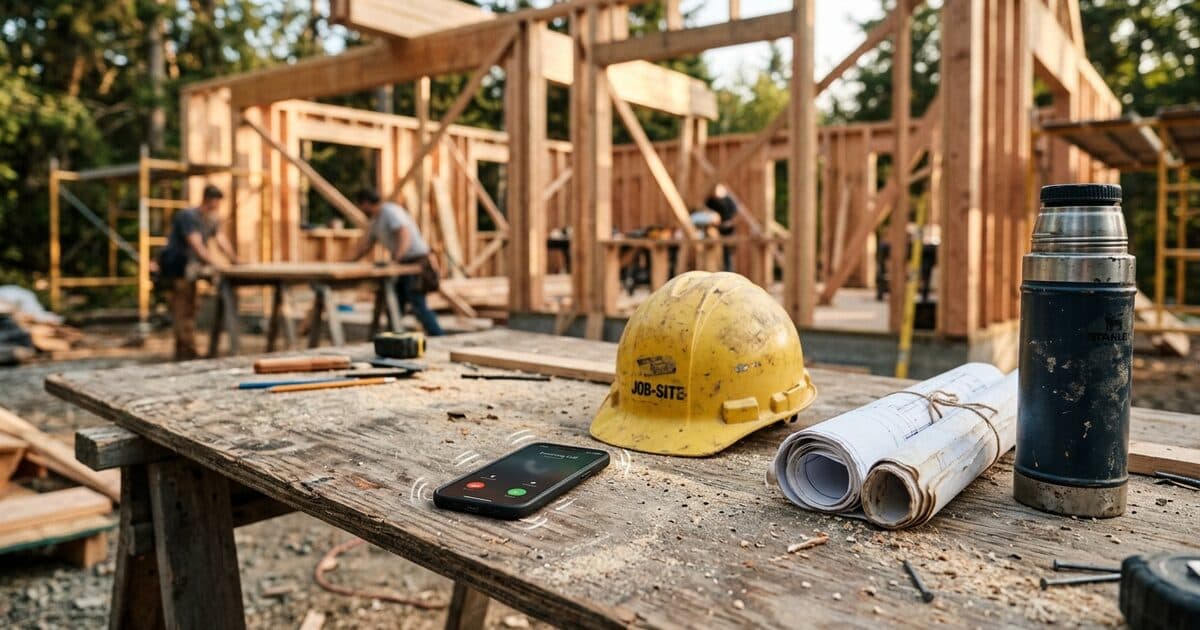
A construction answering service earns its keep on the calls that land while the crew is on site: the homeowner ready to book an estimate for a $40,000 extension, and the GC's office inviting you to bid with proposals due Friday. You cannot take either call over a concrete saw, and neither caller leaves a voicemail. The service that answers, captures project type, location, timeline and budget range, and flags the deadline turns a missed ring into a callback your estimator can actually price.
Construction's phone problem is the opposite of the emergency trades. The valuable call is rarely a burst pipe at 11pm. It is a considered call worth five figures, made during working hours, to a number nobody can hear over the plant noise. The homeowner planning a kitchen extension rings two or three builders and books estimates with the ones who answer. The GC tendering a job works down a subbie list until enough bids come in. Both move on quietly, and you never find out either called.
A builder answering service exists for that gap: the hours when you are on the tools, up a scaffold, or mid-pour, and the calls that cannot wait for a quiet moment that never comes.
Four different callers, one phone number
Most small builders run one number, and everything arrives on it:
- Homeowners wanting estimates — extensions, loft conversions, refurbs. Considered purchases, short shortlists, worth $15,000 to $80,000 and up depending on the job.
- GCs and main contractors inviting you to bid — often with a hard deadline, and the job goes to whoever returns a compliant proposal on time.
- Subcontractors chasing start dates, payment, or whether the site is ready for them.
- Suppliers confirming deliveries, substitutions, and account queries.
Each needs something different: the homeowner needs an estimate booked. The GC's invitation needs the deadline captured and flagged, because "proposal due Friday" buried in a message queue is a lost job. The sub and supplier calls just need an accurate message so you can deal with them in one batch at day's end. A construction company answering service has to sort all four from ordinary speech, not make callers fight a phone menu.
The economics of a missed bid call
Run the numbers on the homeowner side first. A typical kitchen extension or loft conversion runs well into five figures, and even a bathroom refurb commonly bills $10,000 to $25,000. The caller is not ringing ten builders; they ring two or three and book site visits with whoever answers. If your phone goes to voicemail, you were never on the shortlist.
The GC side is blunter. An invitation to bid has a date on it. Miss the call on Tuesday, return it the following Monday, and the tender closed Friday. The job was yours to price and you never knew.
Against that, a bid-intake call lasts two to five minutes. At pay-as-you-go rates of roughly 6¢ per answered minute, that is 12¢ to 31¢ per call. One estimate booked from a call you would otherwise have missed pays for the service for years.
What to capture so the estimator calls back with something real
A message that says "someone rang about an extension" sends your estimator in blind. The callback is only worth making if the intake covers:
- Project type, in the caller's words — "single-storey rear extension" prices differently from "knock through and refit a kitchen"
- Site location, including whether it is inside your working area
- Timeline — when they want to start, and whether anything is driving the date (planning permission granted, baby due, house purchase completing)
- Budget range — asked as a range, not an interrogation, because a caller with a $15,000 expectation for an $80,000 job needs a different conversation
- Deadline, where one exists — tender due dates, decision dates, site-visit availability
- Who is calling — homeowner, GC's office, architect — and a callback number read back to confirm
Capture all six and your estimator rings back sounding informed; capture none and you are returning cold calls to people who booked someone else on Wednesday.
Invitations to bid are the one call type where the deadline matters more than the details. Make sure any service answering your phone treats "proposals due" as time-sensitive and puts the due date at the top of the alert — not as message three of seven you read on Saturday morning. Ask to see how it flags a deadline before you sign.
What a bid call sounds like
A call at 11am on a Tuesday, while you are setting out footings:
Milo: Hartwell Construction — this is Milo. How can I help?
Caller: Hi — we're looking for a price on a single-storey rear extension, about 25 square metres. We've got drawings done.
Milo: Can I take a few details so the right person calls you back with something useful? First, where's the property?
Caller: 14 Chestnut Avenue, in Roundhay.
Milo: That's inside the area Hartwell covers. When are you hoping to start?
Caller: Planning came through last month, so ideally spring. We'd like quotes in the next couple of weeks.
Milo: Understood — quotes within two weeks. Do you have a rough budget range in mind, even a broad one? It helps them come back with realistic options.
Caller: Somewhere between forty and sixty thousand, we think.
Milo: That's helpful. Last thing — your name and the best number to call you back on?
Caller: Rachel Donnelly, and this number is fine.
Milo: Got it — Rachel, rear extension around 25 square metres at 14 Chestnut Avenue, drawings ready, targeting a spring start, budget in the forty-to-sixty range, quotes wanted within two weeks. Someone from Hartwell will call you today to book a site visit.
That text summary lands in your pocket while you are still on the footings. You call back at lunch knowing the job, area, timeline and budget, and you book the site visit while the other two builders' voicemails are still recording nothing.
Evenings are when homeowners ring builders
The GC and supplier calls come in site hours. The homeowner calls cluster at the other end of the day — evenings and weekends, when people finally sit down to plan the extension and start ringing the shortlist. That is also when your phone is least likely to be answered, and when competitors' phones go to voicemail too.
Traditional answering services charge the most for exactly those hours, loading evenings and weekends on top of a $250-plus monthly minimum. An after-hours answering service billed per answered minute costs the same at 8pm as at 8am, and costs nothing on the quiet nights. The same capture-first logic applies to other finishing trades — the painter answering service article covers the decorating version of it.
What to test before signing
- 1
Call it as a homeowner wanting an extension quote
Give it the project type, a vague timeline and a budget range, and read the summary you receive. If it missed the timeline or the budget, your estimator would be calling back blind.
- 2
Call it as a GC's office with a bid deadline
“We're tendering a job, your proposal is due Friday, who do we send the drawings to?” The alert should reach you fast, with Friday at the top. If the deadline is buried, keep shopping.
- 3
Call it fishing for a rate
“What do you charge per square metre for an extension?” The right answer declines to invent a price and offers a proper estimate. The wrong answer quotes a number you never authorised to a caller who will hold you to it.
- 4
Check the message you'd actually receive
Complete address? Correct number read back? Caller type — homeowner or contractor? Could you ring back and sound informed? Most services pass the voice test and fail this one.
What this costs in practice
Dial Milo answers when you cannot — over plant noise, up a scaffold, or at 8pm — captures the project details your estimator needs, texts you a summary of every call, and flags anything with a deadline as urgent. It answers routine questions from documents you upload, like your working area and the job types you take on, and it refuses to quote prices it was not given. Billing is per second of answered call time, roughly 6¢ a minute on a US number, with no subscription, no minimum, and no charge for missed, blocked or spam calls. Forward your existing number free, or take a dedicated one for $3 a month, and the $1 trial credit on a new account buys about 16 minutes of real answered calls to test against.
Forty answered calls a month at two minutes each: about $5. One extension estimate booked from a call that would have hit voicemail covers that for a decade. The full pricing-model comparison, including where human services genuinely win, is in answering service cost.
For your business
Don't lose another $2,000 emergency to voicemail.
Milo picks up while you're on a roof, under a sink, or driving between jobs. She screens emergency vs scheduled, captures the address and callback number, and texts you the moment something's on fire — literally or otherwise.
Get Milo answering your trades lineFrequently asked questions
- What should a construction answering service capture on a bid call?
- Project type in the caller's own words (extension, loft conversion, full refurb), site location, rough timeline or start date, budget range, and any deadline such as a proposal due date. Plus name, callback number read back to confirm, and who is calling — a homeowner, a GC's office, or another sub — because each needs a different callback. With that captured, your estimator rings back with something real instead of starting from zero.
- Can it tell a homeowner's quote request from a GC's invitation to bid?
- A good one can, because it triages from natural language rather than a phone menu. 'We'd like a price for a kitchen extension' gets estimate details captured and a callback booked. 'We're tendering a job and your proposal is due Friday' gets the deadline, the project name and where to collect the plans — and the alert to you is flagged as time-sensitive. Test both before signing.
- What does a construction answering service cost?
- Human services typically start around $250 a month with a minimum you pay whether the phone rings or not. Pay-as-you-go AI services bill per answered minute with no minimum: at Dial Milo's published ~6¢/min, forty two-minute calls a month costs about $5. One captured estimate for a mid-size extension covers that for years.
- How does it work when the crew is on a noisy site all day?
- You keep your existing number and forward it free — the service answers only when you cannot. Callers reach a voice that picks up in seconds instead of your voicemail, and you get a text summary of each call to read between tasks. Urgent calls are flagged so you know which ones cannot wait until the saw stops.
- Will it quote prices to callers asking for rates?
- It should not, and Dial Milo specifically refuses to quote prices it was not given. A caller asking 'what do you charge per square metre for an extension' gets an honest answer — that pricing depends on the job — plus an offer to take their details for a proper estimate. It answers routine questions from documents you upload, like your service area and the work you take on.
Keep reading
Answering Service
Contractor answering service for solo GCs
How a contractor answering service covers the GC who is the whole office: estimate requests booked live, change-order calls routed, at roughly 6¢ a minute.
ReadAnswering Service
After hours answering service: what to know
What an after hours answering service costs, what happens to your 9pm callers without one, and how to choose between forwarding, a human service and AI.
ReadAnswering Service
Answering service cost: what you'll actually pay
What answering services really cost: a receptionist at $3,000–4,000 a month, traditional plans from $250 plus overages, or pay-as-you-go AI at cents a minute.
Read