Answering Service
Painter answering service: win the quote
How a painter answering service captures quote requests while you're on a ladder, books estimates into your calendar, and costs cents per answered call.
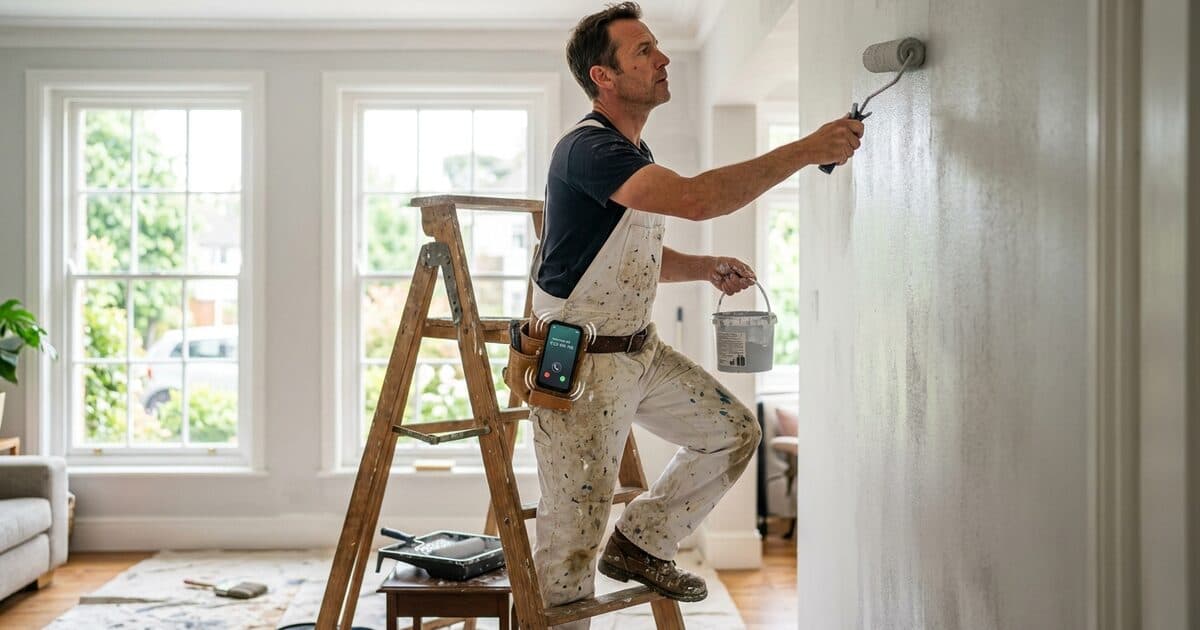
A painter answering service exists for one reason: the quote request that comes in while you are on a ladder goes to whoever answers first, and that is usually not you. The right service answers in seconds, books the estimate straight into your calendar, and costs a few cents per answered call — so even a one-man operation can answer like a company with an office.
Painting has a specific phone problem, and it is not the one answering-service marketing usually describes. Your busy season is exactly when you cannot answer: exterior work means long days on site, sprayer or brush in hand, phone in the truck. The homeowner who wants three rooms repainted before the in-laws visit calls at 7pm, gets your voicemail, and calls the next painter on the list. Homeowners requesting quotes almost never leave messages, because they are calling three of you and booking the first estimate.
So the question is not whether to stop missing calls in some abstract sense. It is who answers the quote requests while you are working.
Why painting quotes go to whoever answers first
A painting quote is a considered purchase with a short shortlist. The caller's behaviour is consistent: search, pick three names, call them in order. The first business to answer, sound competent, and offer an estimate slot gets the visit. The others get a cancelled notification later, if they are lucky.
This is what makes the math so lopsided. An exterior repaint quote might be $3,000–8,000 of work; even a couple of rooms interior is several hundred. The call that decides it lasts ninety seconds. A service that answers that call costs about 9 cents at pay-as-you-go rates. You do not need a spreadsheet to compare those numbers — you need to know whether the call actually gets answered well, which is the rest of this article.
What a good answer sounds like
A quote call handled while you are up a ladder:
Milo: Brightline Painting — this is Milo. How can I help?
Caller: Hi, I'm looking to get the exterior of my house painted. Can someone give me a quote?
Milo: Absolutely. Is it the full exterior, or specific areas like trim and doors?
Caller: The whole house — it's a two-storey, about 2,000 square feet.
Milo: Got it. We do estimates in person so the quote is accurate. I can book you in — would Tuesday or Thursday afternoon work?
Caller: Thursday works.
Milo: You're booked for Thursday at 4pm. Can I confirm your name, the property address, and the best number to reach you?
The caller hangs up with a booked estimate and a confirmation text. You get a text with the name, address, number, and job summary. When you phone back or arrive Thursday, you already know it is a full exterior on a two-storey — you are not ringing back blind.
That last part is the underrated benefit. A callback where you sound informed wins noticeably more work than one where you ask them to repeat everything.
The calls a painting business actually gets
Configuring anything to answer for you starts from the real call mix, which for most painting businesses is four things:
Quote requests. The valuable ones. Interior or exterior, roughly what surfaces, when they want it done — captured, and booked into your calendar if the service can write to it. An answering service that takes a message for someone to key in later is only half solving this, because the estimate slot is often what closes the caller.
Colour and preparation questions. "Do you help pick colours?", "Do I need to move furniture?", "Are you insured?" These are answerable from your own information — a proper service answers from documents you upload rather than improvising, and takes a callback for anything genuinely consultative like a colour consult.
Existing customers checking dates. "Are you still coming Monday?" Answerable from your calendar or your uploaded schedule notes.
Spam and wrong numbers. A meaningful share of any trade line. These should be screened out and, importantly, not billed.
Seasonal surges are the pricing trap
Exterior painting demand arrives with the weather. The first warm fortnight of spring can triple your call volume, right when you are booked solid and least able to answer. Then January is quiet.
This shape is why the monthly-minimum model fits painters so badly. A human answering service sized for your April surge charges the same $250-plus through your dead months — dead money for a business with seasonal cash flow. Per-minute billing with no minimum scales with the weather instead: the surge weeks cost more, the winter costs almost nothing, and the annual total lands far lower. The full comparison of pricing models is in answering service cost.
Where an AI receptionist is not the answer
Worth stating plainly, because it shapes how you set this up. A distressed caller — water damage mid-job, a dispute about a finished room — should reach you, not software. And a proper colour consultation is a sales conversation you want to have personally, because it is where small jobs become whole-house jobs.
The right configuration answers everything and hands off the calls that need you: it captures the colour-consult request with the details you'd want before ringing back, rather than trying to conduct the consultation itself. Anything you evaluate should make that handoff easy to set up and obvious when it happens.
Evenings and weekends are your peak hours
Homeowners call painters when they are home: evenings and weekends. That is precisely when a one-to-five-person outfit has nobody on the phones and no intention of staffing them. A 24/7 answering setup answers the Sunday-morning "we're hosting Thanksgiving and the dining room is still magnolia" call the same way it answers a Tuesday one — and Sunday callers are often the most motivated, because they are planning around a deadline.
What to test before you sign anything
- 1
Call it as a quote requester
“I'd like a quote for painting three bedrooms.” Does it book a real slot in your real calendar, or take a note? The difference is the whole product.
- 2
Ask a question from your own materials
Something your website or one-pager answers — insurance, prep, paint brands. It should answer from your documents, not invent an answer, and offer a callback when it genuinely does not know.
- 3
Check the written message
Name spelled right, address complete, number read back and correct? Could you call back and sound informed? Most services pass the voice test and fail this one.
- 4
Let it take a spam call
Confirm it screens junk and that you are not billed for it. A quiet but real cost saver over a year.
The economics for a one-to-five-person outfit
Dial Milo answers in seconds, books estimates into your Google Calendar, answers from the documents you upload, and texts you the caller's details the moment they hang up. It bills per second of answered call time — roughly 6¢ a minute on a US number — with no subscription, no minimum, and no charge for missed, blocked or spam calls. Forward your existing number free, or take a dedicated one for $3 a month. New accounts start with a $1 trial credit, about 16 minutes of answered calls, so testing it against real callers costs nothing.
Sixty answered calls a month at ninety seconds each comes to about $5.50. One booked exterior quote pays for a year of that several times over. The same triage logic applied to a different trade is covered in the HVAC answering service article — worth a read if you also do trade work where emergencies come into it.
For your business
Don't lose another $2,000 emergency to voicemail.
Milo picks up while you're on a roof, under a sink, or driving between jobs. She screens emergency vs scheduled, captures the address and callback number, and texts you the moment something's on fire — literally or otherwise.
Get Milo answering your trades lineFrequently asked questions
- How do painters handle calls while on a job?
- Mostly badly, because the honest options are limited: let it ring to voicemail and lose a share of callers, stop work to answer and lose time, or have someone answer for you. An answering service is the version that scales — and for a one-to-five-person painting business, an AI receptionist at cents per answered call is usually the only version whose economics make sense.
- What does a painter answering service cost?
- Human answering services typically start around $250 a month with a minimum you pay whether the phone rings or not, which is hard to justify between seasons. Pay-as-you-go AI services bill per answered minute with no minimum: at Dial Milo's published ~6¢/min, sixty 90-second calls a month costs about $5.50, and a quiet off-season month costs almost nothing.
- Can an answering service book painting estimates into my calendar?
- Only if it writes to your actual calendar — otherwise it takes a request that someone keys in later, which is fine until two estimates land on the same evening. Dial Milo connects to Google Calendar and books the estimate while the caller is on the phone, which matters because homeowners often book with whoever schedules them first.
- What should a painter answering service capture on a quote call?
- Name, callback number read back for confirmation, property address, interior or exterior, roughly how many rooms or what surfaces, when they want it done, and how they heard about you. That last one is easy to skip and worth real money — it tells you which of your marketing actually produces calls.
Keep reading
Industries
HVAC answering service: emergency call triage
How an HVAC answering service separates a no-heat emergency from a routine call, and why one missed $400 emergency job costs more than a year of the service.
ReadAnswering Service
Answering service cost: what you'll actually pay
What answering services really cost: a receptionist at $3,000–4,000 a month, traditional plans from $250 plus overages, or pay-as-you-go AI at cents a minute.
ReadAnswering Service
After hours answering service: what to know
What an after hours answering service costs, what happens to your 9pm callers without one, and how to choose between forwarding, a human service and AI.
Read