Answering Service
Electrician answering service for emergencies
How an electrician answering service triages the burning-smell call at 9pm, books panel-upgrade and EV-charger quotes, and costs cents per answered call.
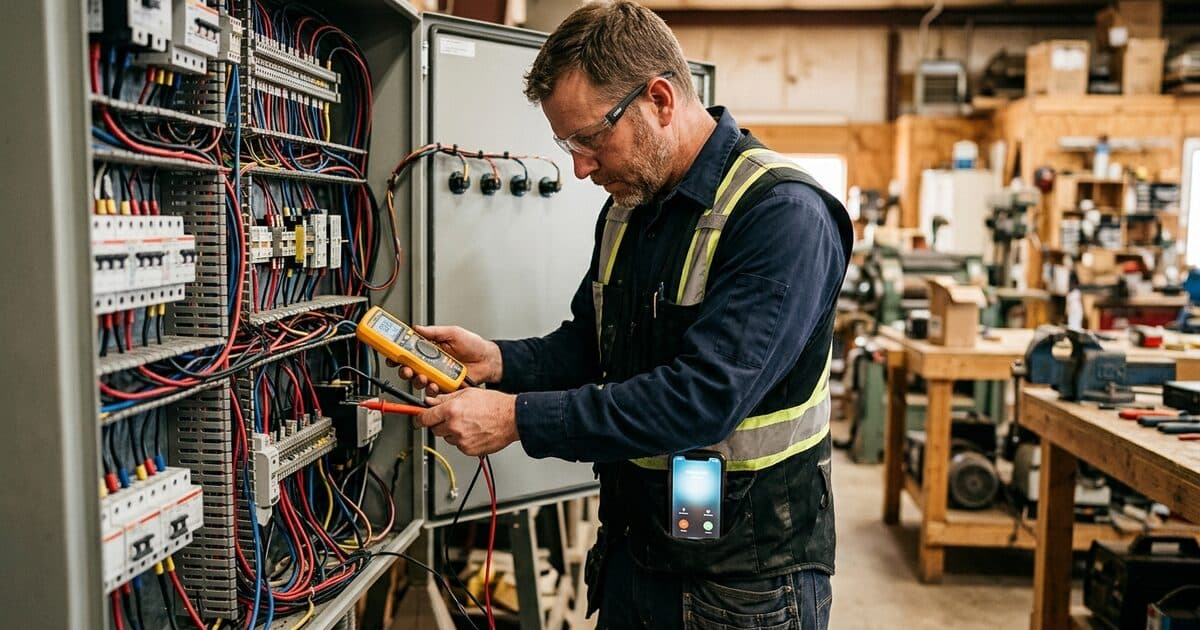
An electrician answering service earns its keep on two call types: the 9pm burning-smell emergency that books with whoever answers, and the panel-upgrade or EV-charger quote worth thousands that arrives while your hands are inside a panel. The service must tell them apart — escalate the first, capture and book the second — because one that treats both the same is expensive voicemail.
Electrical work has the most literal version of the trades' phone problem. You cannot answer with your hands inside a live panel, and you should not. The homeowner who smells burning near the fuse box at 9pm calls, gets your voicemail, and calls the next electrician on the list — and keeps calling until a human-sounding voice picks up. That callout, at emergency rates, went to whoever answered. You never learn it existed.
Meanwhile the daytime calls that are not emergencies are often the most valuable of the week: panel upgrades, EV charger installs, full rewires. Those callers will wait for a callback, but only if someone takes their details properly and sounds like a real business. Two call types, two right responses, and the value of the service is entirely in telling them apart.
The economics of the 9pm burning-smell call
Emergency electrical work is premium work. A no-power or burning-smell callout typically bills $350 and up before the repair starts, and the caller is not price-shopping — they are frightened and want someone tonight.
The call that captures it lasts two to ten minutes. At pay-as-you-go rates of roughly 6¢ per answered minute, that is 12¢ to 61¢. One recovered emergency callout pays for months, often a year, of the service. This is the same asymmetry that makes the plumbing answering service math so lopsided: a handful of missed emergencies a year is a real five-figure loss, invisible because the callers never identify themselves.
The comparison is never the monthly cost against zero. It is the monthly cost against one job.
Emergency versus quote: the triage that matters
The caller never says "this is an emergency." They say:
- "I can smell burning near the fuse box"
- "Half the house has no power and the breakers won't reset"
- "There's a socket sparking when I plug things in"
- "A wire came down in the garden and it's live"
- "How much roughly to install an EV charger?"
Four of those need you alerted immediately, address and callback number captured first. The fifth needs details taken and a booked estimate. An electrician answering service has to recognise the difference from ordinary speech, in both directions — waking you for a tripped RCD that just needs resetting is nearly as bad as letting a burning smell wait until Tuesday.
A burning smell or visible scorch marks are a safety call before they are a booking. Any service answering your phone must be instructed to tell the caller to keep people away from the area, switch off the main breaker only if it is safe to reach, and call the fire service if there is smoke or flame — not to simply schedule a visit. Ask to see that instruction before you sign.
What a no-power call sounds like
A call at 9:40pm, while you are finishing dinner:
Milo: Hartley Electrical — this is Milo. How can I help?
Caller: We've lost power to half the house and I can smell something burning near the consumer unit.
Milo: That sounds urgent — let's get someone to you fast. First: keep everyone away from the consumer unit, and don't touch it if you can smell burning. If there is any smoke or flame, hang up and call the fire service first. Now — what's your name and the address?
Caller: Dana Whitfield, 88 Roslin Road.
Milo: Best callback number, Dana?
Caller: This one.
Milo: Got it — 88 Roslin Road, partial power loss, burning smell near the consumer unit, caller keeping clear. I'm alerting the on-call electrician now and he'll call you straight back.
You get a text with the name, address, number, and a summary you can act on — not a voicemail to transcribe later. The caller got told what to do in the meantime, which is the part a scripted human agent rarely improvises.
For electrical contractors: the quote calls that pay for the year
The emergency triage gets the attention, but for most electrical contractors the quiet money is in the scheduled work. A panel upgrade is typically $1,500–4,000 of work. An EV charger install is $800–2,500 and growing as a call category — the caller has just bought the car and wants it booked this week. These are considered purchases with a short shortlist: the caller rings two or three electrical contractors and books the first competent estimate.
An electrical contractor answering service that answers that call in seconds, captures the car make or the panel age, and books the estimate straight into your calendar wins work you would otherwise never know you missed. A message that says "called about a charger" sends you back blind, to a caller who has already booked someone else.
After-hours electrician answering service economics
Electrical emergencies cluster at exactly the times you cannot or should not answer: evenings when people cook, shower and plug things in, weekends when they are home to notice faults, storms when lines come down. That is precisely where traditional answering-service pricing bites — human services commonly load nights and weekends on top of a $250-plus monthly minimum, charging you the most for the hours you most need covered.
An after-hours answering service billed per answered minute costs the same at 2am as at 2pm, and costs nothing on the nights nobody calls. For a trade where the after-hours calls are the highest-margin calls of the week, flat per-minute pricing is not a minor billing detail — it is most of the argument.
What to capture on every call
Electrical intake has a required list, and a message missing any of it means a callback before you can even quote:
- Address, including access notes — flats, gate codes, where the consumer unit or panel is
- Callback number, read back to confirm
- The symptom in the caller's own words — "no power to half the house" diagnoses differently from "all sockets dead"
- Safety status — burning smell, scorch marks, water near electrics, anyone still at risk
- Job specifics for quotes — panel size and age for upgrades, car make and mounting location for EV chargers, deadline if there is one
A service that reliably captures all five turns a missed evening into a job you can price on the drive over. One that texts you "Dana, electrical problem" has saved you nothing.
What to test before signing
- 1
Call it with a real emergency, in real words
“I can smell burning from the fuse box.” Time how long until your phone buzzes, and read what the alert contains. That latency is the product.
- 2
Call it with an EV-charger quote
“What would it cost to fit a home charger for a Tesla?” The right answer captures the car, the mounting spot and your details, and books an estimate. The wrong answer invents a price you never authorised.
- 3
Listen for the safety instruction
A genuine emergency response tells the caller to keep clear of the panel and when to call the fire service. If it just takes a message, it does not understand electrical calls.
- 4
Check the message you'd actually receive
Complete address? Correct number? Could you ring back and sound informed? Most services pass the voice test and fail this one.
What this costs in practice
Dial Milo is built around the emergency-versus-scheduled split: it recognises urgency from natural phrasing, captures address and callback number, texts you the moment something is urgent, and answers routine questions from the documents you upload — while refusing to quote work it cannot price. Billing is per second of answered call time, roughly 6¢ a minute on a US number, with no subscription, no minimum, and no charge for missed, blocked or spam calls. Forward your existing number free, or take a dedicated one for $3 a month, and the $1 trial credit on a new account buys about 16 minutes of real answered calls to test against.
Sixty answered calls a month at ninety seconds each: about $5.50. One burning-smell callout covers that for a year. The full pricing-model comparison, including where human services genuinely win, is in answering service cost.
For your business
Don't lose another $2,000 emergency to voicemail.
Milo picks up while you're on a roof, under a sink, or driving between jobs. She screens emergency vs scheduled, captures the address and callback number, and texts you the moment something's on fire — literally or otherwise.
Get Milo answering your trades lineFrequently asked questions
- What should an electrician answering service do with an emergency call?
- Recognise it from the words callers actually use — burning smell, sparks, no power at all, exposed wire — capture the address and callback number first, and alert you immediately rather than queuing a message. It should also tell the caller something genuinely useful while they wait, like staying clear of the panel and switching off the main breaker only if it is safe to reach.
- Is an after-hours electrician answering service worth it?
- The after-hours calls are usually the most valuable an electrician gets: no-power and burning-smell calls carry premium callout rates, and the caller books whoever answers. A single $350+ emergency callout pays for months of an AI answering service at cents per answered call — the real question is whether the service triages emergencies properly rather than treating every call the same.
- What does an electrician answering service cost?
- Human services typically start around $250 a month with a minimum you pay whether the phone rings or not, and some load nights and weekends — exactly when electrical emergencies happen. Pay-as-you-go AI services bill per answered minute with no minimum: at Dial Milo's published ~6¢/min, sixty 90-second calls a month costs about $5.50, and even a ten-minute emergency intake is about 61¢.
- Can an answering service tell a no-power emergency from an EV-charger quote request?
- A good one can, because it triages from natural language rather than a phone menu. 'Smell burning from the fuse box' triggers immediate escalation; 'how much to fit a home charger' gets the car make, panel details and a booked estimate. Test both before signing — call it with each, in real words, and watch what it does.
- What should it capture on a panel-upgrade or EV-charger quote call?
- Name, callback number read back to confirm, property address, and the job specifics that change the quote: current panel size and age for an upgrade, car make and where the charger will mount for an EV install, plus any deadline. Capture that and you ring back sounding informed instead of asking them to repeat everything.
Keep reading
Answering Service
Plumbing answering service for emergency calls
How a plumbing answering service handles the 11pm burst pipe: real triage, booked jobs, and cents per answered call instead of a $250 monthly minimum.
ReadAnswering Service
After hours answering service: what to know
What an after hours answering service costs, what happens to your 9pm callers without one, and how to choose between forwarding, a human service and AI.
ReadAnswering Service
Answering service cost: what you'll actually pay
What answering services really cost: a receptionist at $3,000–4,000 a month, traditional plans from $250 plus overages, or pay-as-you-go AI at cents a minute.
Read