Answering Service
Roofing answering service for storm season
How a roofing answering service handles the 48-hour call surge after a hailstorm: leak triage, insurance-claim callers, and booked inspections for cents a call.
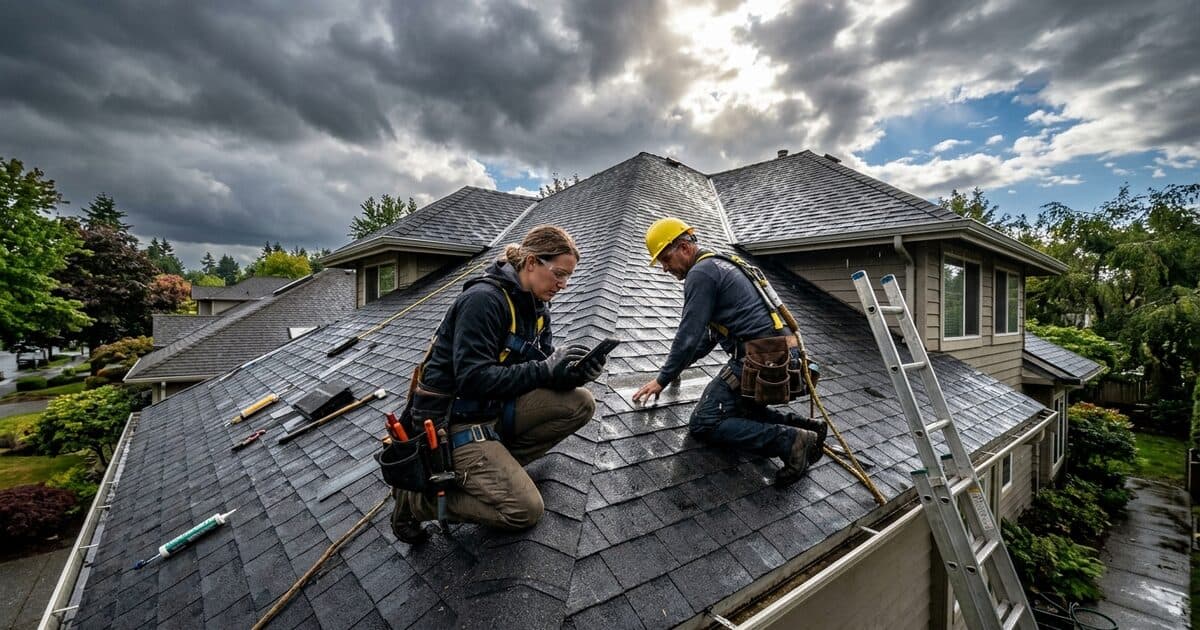
A roofing answering service earns its keep in the 48 hours after a hailstorm, when a normal week of calls arrives in two days and every caller books the first roofer who answers. It has to sort three call types fast: the active leak that needs you now, the inspection request that fills your season, and the insurance-claim caller who needs careful answers. And it has to do all of it while your crew is on a roof, where nobody can take a call.
Roofing has a call pattern no other trade matches. Most weeks are steady: a few quote requests, a repair, a realtor needing a certification. Then a hailstorm hits one side of town, and by breakfast the next day every homeowner within two miles is staring at a ceiling stain or picking shingle granules out of the flowerbed. They all start calling at once, and they call down the search results until a voice picks up.
You cannot be that voice. You are on a ladder, or three squares into a tear-off, or strapped in next to an open decking repair. The one who climbs down to answer is losing daylight; the one who answers up there is a safety problem. So the surge goes to whoever answers, and for most roofing companies that is nobody.
The 48 hours after a hailstorm
The economics here are different from a normal missed call. A missed storm-inspection request is often the front end of a full replacement, which typically runs $8,000 to $15,000 depending on size and materials. The first roofer to answer and book the inspection tends to get the whole street, because neighbours compare notes over the fence.
A storm that would mean a dozen calls in a normal week can mean eighty across two days, evenings included, because homeowners find the damage when they get home from work. Human services commonly charge a $250-plus monthly minimum and then overage rates when volume spikes, which describes your storm weeks exactly. At pay-as-you-go rates of roughly 6¢ per answered minute, eighty 90-second calls cost about $7.50, and the quiet week before the storm costs nothing.
What a storm-night leak call sounds like
A call at 8:15pm, rain still coming down, while you are finishing a tarp job across town:
Milo: Redline Roofing — this is Milo. How can I help?
Caller: There's water dripping through my kitchen ceiling. It's getting worse.
Milo: That needs someone out fast, so let's get your details first. While we talk: get buckets under the drip and move anything nearby, and if the ceiling is bulging, keep clear of that spot. Please don't go up into the attic or onto the roof yourself. What's your name and the address?
Caller: Rachel Ortiz, 2214 Cedar Bend Drive.
Milo: Best callback number, Rachel?
Caller: This one.
Milo: Got it — 2214 Cedar Bend Drive, active leak through the kitchen ceiling, drip contained with buckets. I'm alerting the roofer now and he'll call you right back about getting out there tonight or first thing.
You get a text with the name, address, number and leak status; the caller got told what to do and what not to do.
Active leak, inspection, or insurance claim
Storm callers never announce which kind they are. They say:
- "Water's coming through the bedroom ceiling right now"
- "A limb came down and punched through over the garage"
- "There's shingles all over my yard, can someone come look?"
- "My insurance company told me to get an inspection and an estimate"
- "How much roughly for a new roof?"
The first two need you alerted immediately, address and callback number captured before anything else. The third and fourth need a booked inspection, and the fourth also needs careful handling, covered below. The fifth needs details taken and a callback, not an invented price. A roofing answering service has to sort these from ordinary speech, in both directions: waking you for a handful of missing granules is nearly as bad as letting an active leak sit in a queue until morning.
Two instructions are non-negotiable for any service answering a roofer's phone. First, safety: never send a caller onto a wet roof or into an attic during a storm. Second, insurance: never promise what a policy will cover. Both are liability you did not create but will own. Ask to see these instructions in writing before you sign. Storm surges hit HVAC companies too, when flooding and power surges kill condensers; the HVAC answering service article covers that version.
Insurance-claim callers are a third call type
Storm season turns half your inbound calls into claim conversations. The caller is stressed, often on a deadline from their insurer, and asking questions with money attached: can you inspect before the adjuster comes, will you meet him on site, do you handle the paperwork.
The right answers are your answers, so the service should respond from documents you upload: your inspection process, whether you attend adjuster appointments, how you handle supplements. What it must never do is improvise: a wrong "yes, insurance usually covers that" or a guessed price per square becomes the caller's expectation, and you inherit it at the kitchen table. A service that refuses to quote figures it was not given is protecting the deal, not being unhelpful.
What to capture on every call
Roofing intake has a required list, and a message missing any of it means a callback before you can even look at the job:
- Address, including anything that affects a ladder or trailer: gated street, steep drive, dogs
- Callback number, read back to confirm
- The damage in the caller's own words — "active drip through the ceiling" schedules differently from "shingles in the yard"
- Whether the leak is live right now, and what the caller has done about it
- Insurance status — claim filed, adjuster visit booked, or not contacted yet, because it changes what you say when you ring back
A service that captures all five turns a chaotic storm evening into a list of jobs you can route in the morning. One that texts you "Rachel, roof leak" has saved you nothing.
What to test before signing
- 1
Call it with an active leak, in real words
“Water's dripping through my kitchen ceiling and it's getting worse.” Time how long until your phone buzzes, and read what the alert contains. That latency is the product.
- 2
Call it as an insurance-claim caller
“My adjuster comes Thursday, can you inspect before then and will you meet him?” The right answer captures the appointment details and books the inspection. The wrong answer promises coverage or invents prices.
- 3
Listen for the safety instruction
A genuine leak response tells the caller to bucket the drip and stay off the roof and out of the attic. If it just takes a message, it does not understand roofing calls.
- 4
Check the message you'd actually receive
Complete address? Correct number? Leak status and insurance status clear? Most services pass the voice test and fail this one.
What this costs in practice
Dial Milo is built around exactly this split: it recognises an active leak from natural phrasing and texts you the moment one comes in, books inspections, answers process questions from the documents you upload, and refuses to quote prices or coverage it was not given. It answers in multiple languages, which matters on storm streets more than most roofers expect. Billing is per second of answered call time, roughly 6¢ a minute on a US number, with no subscription, no minimum, and no charge for missed, blocked or spam calls. Forward your existing number free, or take a dedicated one for $3 a month, and the $1 trial credit on a new account buys about 16 minutes of real answered calls to test against.
A storm week of eighty answered calls at ninety seconds each: about $7.50. One booked replacement covers that for the decade. Outside storm season the same math covers the 11pm "there's a drip" call; the after-hours answering service article runs those numbers. The full pricing-model comparison, including where human services genuinely win, is in the answering service pricing comparison.
For your business
Don't lose another $2,000 emergency to voicemail.
Milo picks up while you're on a roof, under a sink, or driving between jobs. She screens emergency vs scheduled, captures the address and callback number, and texts you the moment something's on fire — literally or otherwise.
Get Milo answering your trades lineFrequently asked questions
- What should a roofing answering service do with an active-leak call during a storm?
- Treat it as an emergency: capture the address and callback number first, alert you immediately, and tell the caller something useful while they wait, like getting buckets under the drip and moving furniture, and never to climb on a wet roof themselves. A message queued for the morning is the wrong outcome for water coming through a ceiling.
- Can an answering service handle the call surge after a hailstorm?
- An AI service can, because it answers every call at once rather than queuing callers on a limited number of human agents. That matters in the 48 hours after a hailstorm, when a normal week of calls arrives in two days and each caller rings roofers down the list until someone picks up. Per-minute billing also means the surge costs you a few dollars, not overtime rates.
- What does a roofing answering service cost?
- Human services typically start around $250 a month with a minimum you pay whether the phone rings or not, and some charge overage rates during high-volume periods, which is exactly your storm weeks. Pay-as-you-go AI services bill per answered minute with no minimum: at Dial Milo's published ~6¢/min, a storm week of eighty 90-second calls costs about $7.50.
- How should it handle callers with insurance claims?
- Capture the claim status and the adjuster appointment details, answer process questions from the information you uploaded, such as whether you inspect before the adjuster visit, and book the inspection. It should never discuss what a policy will cover or quote repair prices you have not given it, because a wrong number in a claim conversation causes real problems later.
- Will a roofing answering service quote prices to callers?
- A good one will not invent figures. Roofing quotes depend on pitch, access, layers, decking condition and materials, so a ballpark blurted out on a first call is usually wrong. The right behaviour is to capture the details, offer a booked inspection or a callback, and only repeat pricing guidance you explicitly provided.
Keep reading
Industries
HVAC answering service: emergency call triage
How an HVAC answering service separates a no-heat emergency from a routine call, and why one missed $400 emergency job costs more than a year of the service.
ReadAnswering Service
After hours answering service: what to know
What an after hours answering service costs, what happens to your 9pm callers without one, and how to choose between forwarding, a human service and AI.
ReadAnswering Service
Answering service pricing compared
Per-minute, per-call, subscription, or pay-as-you-go AI: the four pricing models compared, three worked months, and the fees outside the headline rate.
Read