
Screening a call means gathering enough about who is calling and why before deciding to talk live, take a message, route, delay or reject the call.
The familiar advice to ignore every unknown number works poorly as a business phone policy. First-time customers usually aren't in your contacts yet. A useful screen gives them a way to explain their request without letting every sales pitch interrupt your staff.
What It Means to Screen a Call
Call screening is a decision process, not another name for blocking. Someone, or an automated receptionist acting for them, gathers information before deciding whether a caller needs a live conversation.
The habit isn't new. As answering machines, voicemail and caller identification became common, households gained ways to hear from callers without immediately speaking to them. In a 2004 survey, Pew Research Center found that 43% of Americans used an answering machine or voicemail to screen calls at least some of the time.
Screen, block, silence or answer
These actions aren't synonyms. Each gives a legitimate caller a different chance of reaching you.
| Action | What happens | What the caller experiences | Who can still get through |
|---|---|---|---|
| Screen | Ask who is calling and why before anyone joins | Caller states name and purpose; a transcript may be sent to the recipient; screening ends when a person joins | Genuine callers on unfamiliar numbers, once their purpose is clear |
| Block | Reject the call | Busy signal, silence or a carrier rejection | Almost no one calling from that number |
| Silence | Send to voicemail without ringing | No ringing at the recipient's phone; a message is available only if the caller leaves one | People willing to leave a voicemail |
| Answer live | A person or receptionist joins at once | A full conversation starts immediately | Everyone who stays on the line, including spam callers |
The transcript option makes the distinction especially clear. The Google call-screening instructions explain that screened callers are told a transcript of their exchange will be provided to the recipient. The recipient can assess the request before joining.
Say a repair shop receives a call from an unfamiliar mobile number. Blocking prevents the shop from learning anything. Screening lets the caller explain that their vehicle won't start and that they need to arrange a repair.
Practical rule: An unfamiliar number is missing context, not evidence that the caller is unwanted.
Who does the screening?
A person can screen calls by checking caller ID, listening to voicemail or asking a receptionist to find out who's calling. An automated receptionist performs the same basic job for staff: answer, learn the purpose, collect useful details and choose an appropriate next step.
For a business, that next step might be completing a routine request, taking a message or transferring the caller. The important question isn't whether the phone rang. It's whether the caller had a fair opportunity to explain what they needed.
When someone asks, what does it mean to screen a call, the business answer is selective attention. Give legitimate and urgent callers access to service. Delay or refuse irrelevant, unwanted or poorly timed interruptions.
Why Unknown Numbers Rarely Get Answered
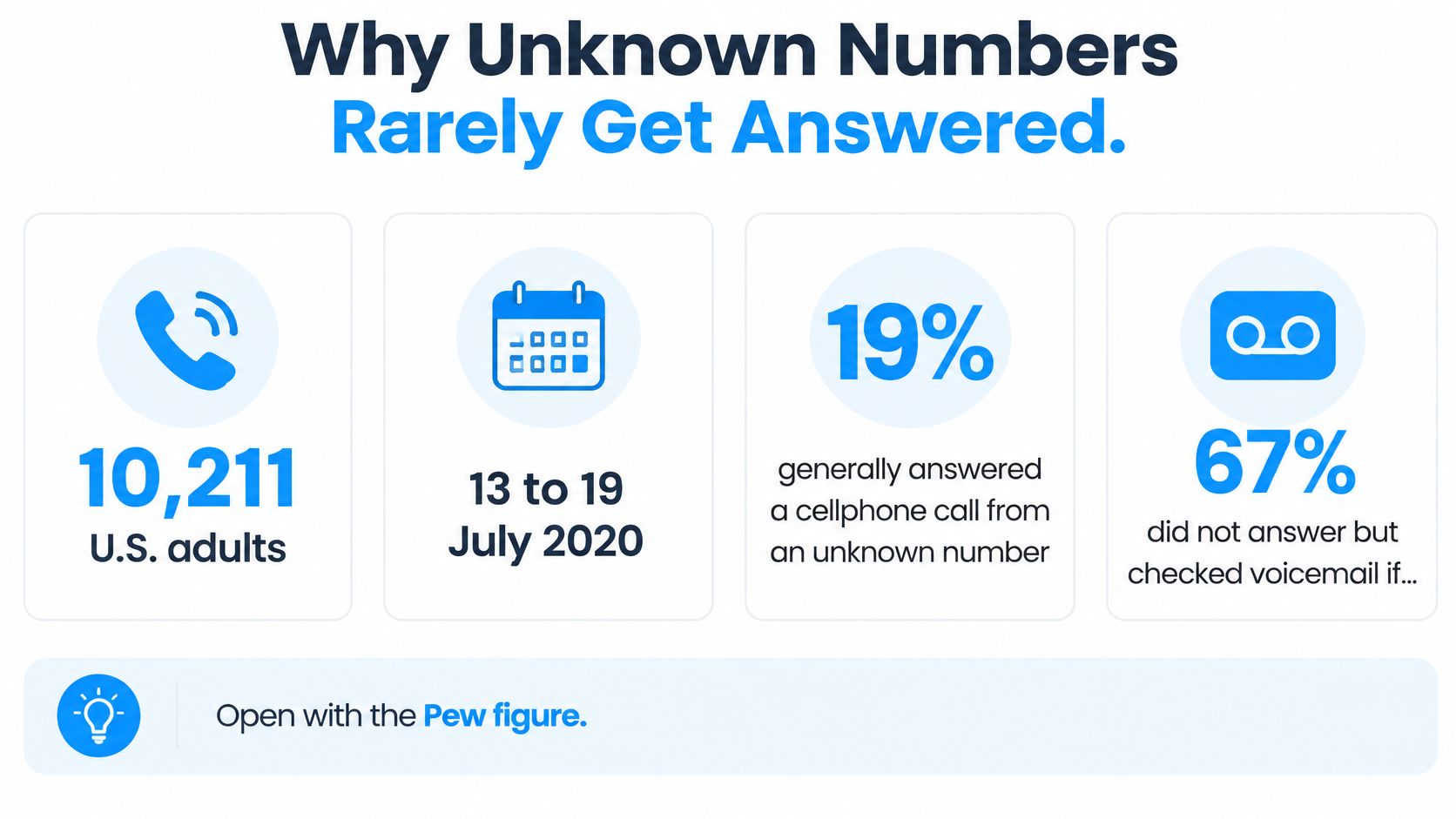
Only 19% generally answered a cellphone call from an unknown number in a Pew Research Center survey of 10,211 U.S. adults conducted from July 13–19, 2020; 67% generally didn't answer but checked voicemail if one was left, while 14% neither answered nor checked the message.
Fear matters. In an August 2024 survey of 1,556 U.S. adults, TransUnion found that 74% didn't answer unknown numbers because they feared scams. Separately, Hiya's 2024 State of the Call report classified 28% of the 46.75 billion unknown calls it analyzed in 2023 as spam or fraud.
Give recipients something to recognize
An unanswered business call isn't automatically a lost opportunity. The recipient may be waiting for a credible identity, a useful message or a reason to call back.
- Identify the business: Understand how branded caller ID supports recognition, without treating a displayed name as a guarantee.
- Explain the purpose: Make a reminder or win-back understandable before asking for action.
- Preserve the outcome: Save inbound names and requests, and record unanswered outbound attempts rather than leaving gaps in the contact history.
How Screening Separates Identity from Intent
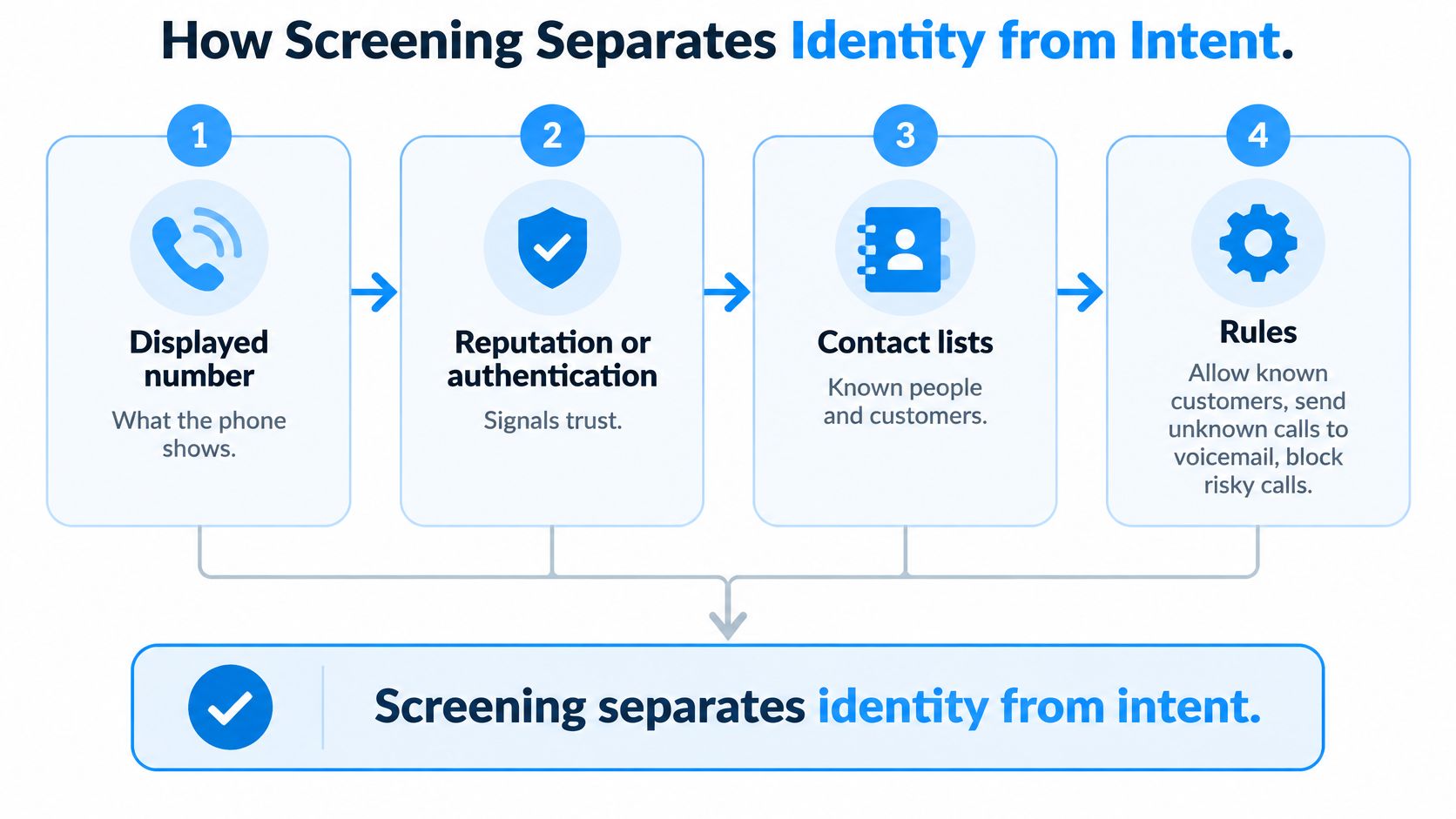
Identity tells you who appears to be calling. Intent tells you what they want. A workable screening policy needs both.
The displayed number, contact list, reputation signals and business rules help decide what happens next. A known customer might go straight to reception. An unfamiliar caller might be asked their purpose. Suspected fraud might be rejected before staff are interrupted.
What authentication can tell you
In internet-based telephony, STIR/SHAKEN lets the originating carrier digitally sign caller-number information so later carriers can validate it. The FCC's guidance on combating robocalls explains authentication and tools that block, label or silence unwanted calls. Authentication helps evaluate the number, but it doesn't establish that the caller has a legitimate purpose.
Think of these signals as inputs to a decision, not a verdict. A familiar number doesn't make every request appropriate. An unfamiliar number doesn't make a new patient or first-time buyer suspicious.
A practical decision order
- Capture the displayed number. Retain any authentication or reputation status your phone system makes available. Don't invent a trust status when none is supplied.
- Ask a short purpose question. Start with what the caller needs help with. Avoid a long questionnaire before you know the category.
- Identify the caller. Collect their name and a usable callback number. Match an existing record when appropriate.
- Classify urgency. Establish whether the request needs immediate attention, a scheduled appointment or an ordinary callback.
- Route by business policy. Transfer, book, take a message or decline based on written rules, not improvised guesses.
The useful output is a structured call record: caller identity, reason, requested service, urgency, permission for further contact and intended destination. A bare accepted-or-rejected label doesn't tell the next person how to help.
For trades, ask about job type, address, urgency and callback number. A leaking fitting that can be scheduled needs a different response from an active emergency. In our screening process, we separate emergencies from scheduled jobs using those details.
A legal-office screen needs different questions: practice area, matter type and deadline. We ask those before booking and only book when the matter fits. An out-of-scope caller receives a polite referral message rather than an appointment the office can't use.
A good screen collects enough information to choose the next action, not every detail needed to finish the work.
Caller ID can be wrong or manipulated, and automated classification can be mistaken. High-consequence requests need a clear handoff to a person. For a clinic, that means administrative screening mustn't turn into an unsupported clinical judgment or prevent urgent concerns from reaching appropriate help.
What an Inbound Caller Actually Hears
A caller doesn't experience your routing settings. They hear a greeting, answer questions and wait to find out whether someone can help.
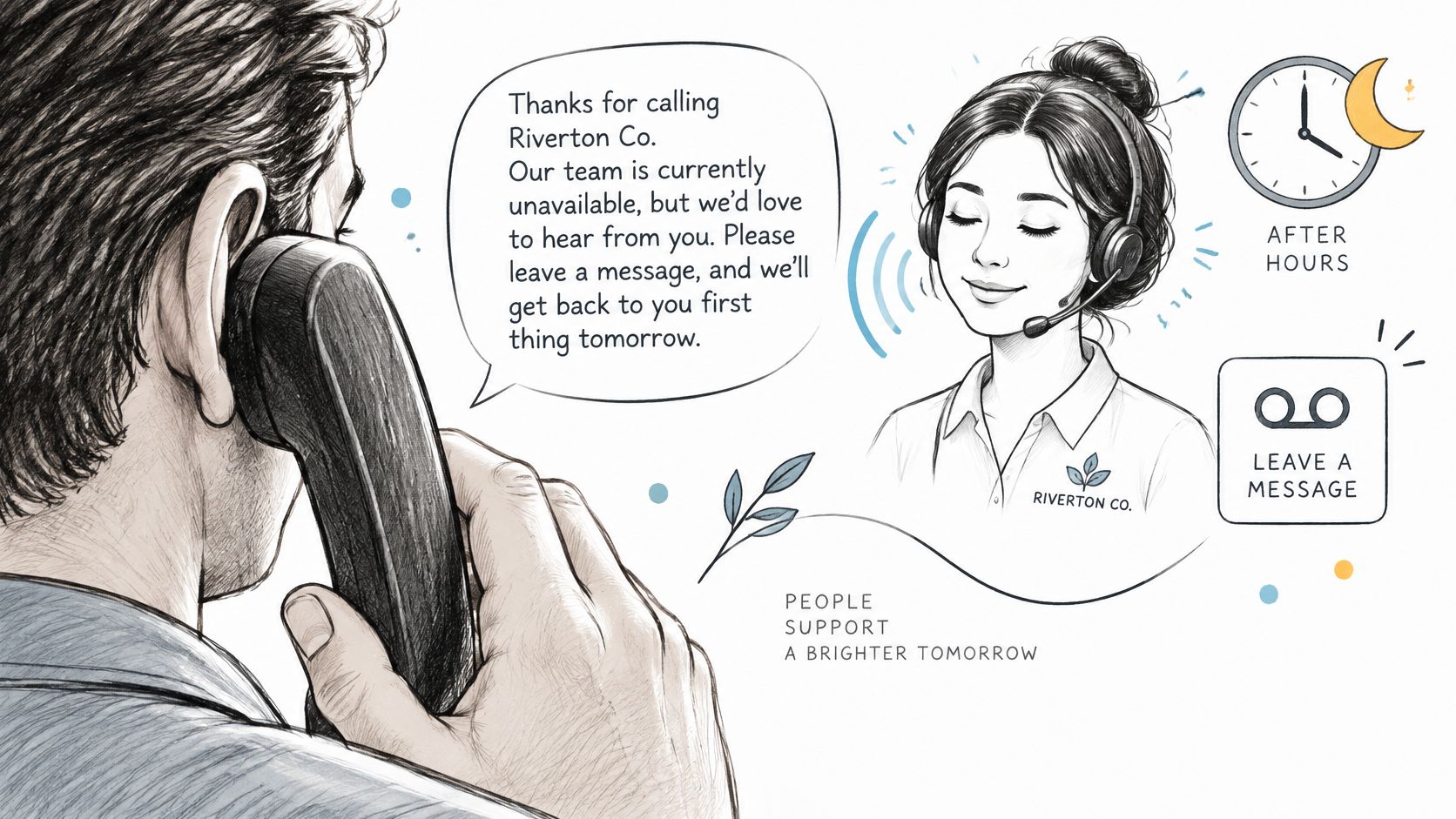
After hours, that experience should still have a clear destination. A request for a callback is useful only if someone captures it and knows what to do next.
At a clinic
Say someone calls a clinic after reception closes. They should hear the clinic's identity, an explanation of who or what is answering, and a brief request for their name and reason for calling. They shouldn't have to describe sensitive medical details merely to ask about an appointment.
A routine scheduling request can end with a booking or a clear callback arrangement. A potentially urgent concern needs the clinic's approved escalation instructions, not reassurance invented by an automated receptionist.
At a repair business or property office
A homeowner calling about a broken heater needs practical questions: what stopped working, where the property is and whether the situation requires urgent attention. The receptionist should explain whether a person will join or whether the business will receive the details for follow-up.
A property enquiry needs another kind of screen. Ask which property interests the caller, their timeline and whether they meet the office's prequalification criteria before allocating a showing. A casual browser can receive information without taking an appointment intended for a ready buyer.
The caller should hear a greeting in the business's chosen voice and approved script. When a person is needed, our process takes the details, then texts the business or transfers the call. An out-of-scope enquiry should end with a short explanation or referral, not a dead line.
For an example of the phone-handling experience, listen to the demonstration below.
What staff need afterward
- Who called: Name and callback number, with any relevant existing customer record.
- Why they called: A useful request summary, not just a missed-call label.
- What was promised: Booking details, transfer destination or the agreed next step.
A captured enquiry gives staff something actionable when they return. A missed call without a message doesn't explain whether the caller wanted a quote, an appointment or urgent assistance.
Callers also need to stay cautious about displayed identities. Gini Help's guide to spotting spoofed business names on calls is a useful companion to that caution.
A fair screen leaves the caller knowing who answered, why the questions were necessary and what happens next.
How Outbound Screening Stays Lawful
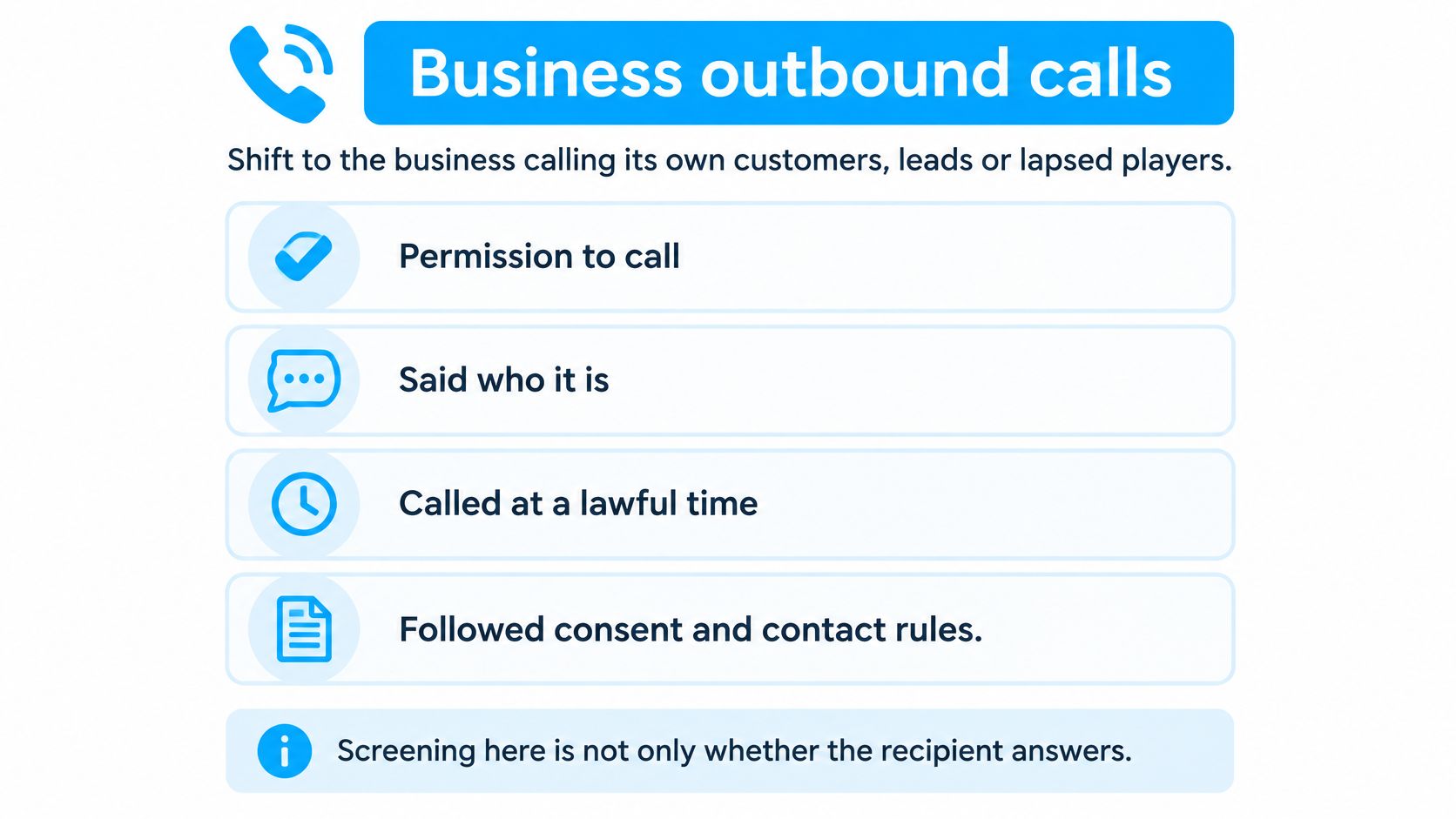
When a business calls customers, leads or lapsed players, screening starts before dialing. The business needs permission, an appropriate contact window and a reliable way to record the recipient's decision.
Outbound screening rules that are not optional
| Control | What it requires | Where it applies |
|---|---|---|
| Prior express consent | Generally obtain consent before an autodialer or artificial or prerecorded voice calls a wireless number, as described in the FDIC's TCPA examination manual | U.S. outbound calls to wireless numbers |
| Written consent | Obtain written consent when the covered call contains an advertisement | U.S. telemarketing using an autodialer or artificial or prerecorded voice |
| Calling hours | Call only from 8:00 a.m. to 9:00 p.m. in the recipient's local time, unless they agreed otherwise, under the FTC's Telemarketing Sales Rule guidance | U.S. telemarketing to residences |
| Business identification | Name the responsible business at the beginning and provide its telephone number or address during or after the message, under the FCC's TCPA rules | U.S. prerecorded telemarketing messages |
| Opt-out | Provide an immediate mechanism to stop future calls; keep it available during the call and outside business hours, and honor revocation in any reasonable manner | Applicable U.S. automated and telemarketing calls |
| Do-not-call lists | Screen against the National Do Not Call Registry where applicable and honor opt-outs immediately | Lists covered by do-not-call rules |
These are operating controls, not a complete legal assessment. Campaign purpose, jurisdiction and the technology used can affect the requirements. Review your intended workflow against AI phone call laws before uploading a list.
Make the opening honest and useful
Only call people who agreed to hear from the business. At the start, identify the business, say that the caller is an AI and explain the purpose. Don't present an automated caller as a human.
The business remains responsible for required AI and recording disclosures. We provide dashboard toggles for these controls, which the business must enable as required in its jurisdiction. Customers must also screen contacts against applicable registers, including the UK TPS and CTPS, and honor opt-outs immediately.
Campaign safeguard: A request to stop is an instruction, not an objection for the script to overcome.
Record outcomes such as answered, refused, callback requested, wrong number and do-not-contact. Record no-answer attempts too. Insurance renewals, subscription reminders, research calls and iGaming reactivation campaigns all need a contact history that distinguishes a requested callback from permission to keep trying.
Screening Mistakes That Drop Real Customers
More blocked calls doesn't necessarily mean better screening. A business can reduce interruptions while preventing new customers from reaching anyone.
Ofcom's suspicious-calls research reports that three-quarters of UK landline users have caller display, nearly all of those users inspect incoming numbers, and almost all mobile users do likewise. Recipients of suspicious calls commonly delete content or block numbers.
Mistakes on both sides of the line
A rotating, unfamiliar outbound identity gives recipients little to recognize. Aggressive inbound blocking can exclude a new patient, hotel guest or first-time buyer. Weak filtering creates the opposite problem: staff spend their attention on nuisance calls while genuine callers wait.
Avoid these shortcuts:
- Treating silence as completion: No answer doesn't tell you whether the person rejected the purpose or never saw the call.
- Blocking every non-contact: New customers haven't had an opportunity to become known callers.
- Scheduling from headquarters time: A national list needs contact-level timing.
- Measuring raw activity: Block volume and talk time don't establish that useful work happened.
- Removing human access: A caller asking for a person needs an actionable transfer or callback path.
Measure access and useful outcomes
Track answer rate, qualified-call rate, transfer rate, false-block rate, abandonment, opt-out compliance and appointment or resolution conversion. Split results by caller type so routine reminders don't obscure problems with first-time enquiries.
For win-back planning, KeenVerdict's customer retention data with cited sources can provide broader context. Your own call outcomes should determine whether a particular screening rule helps customers return.
Use a consistent outbound number, authenticate it where available, name the business promptly and offer a person or callback. The aim is fewer unnecessary interruptions without making genuine customers fight for access.
Choose Who Your Screen Lets Through
Choose a rule before choosing automation. If staff are available, let known customers through and ask unfamiliar callers a short purpose question. If the team is working, in appointments or closed, collect the request and assign a next step.
For outbound lists, make consent, disclosure and contact restrictions part of campaign preparation. Define what qualifies for booking, using resources such as how Estimatty filters unbookable inquiries, and decide when a warm transfer or cold transfer is appropriate.
Run repetitive handling consistently
Dial Milo answers inbound calls 24/7, books into Google Calendar, texts confirmations, transfers to people and speaks 20 languages. It runs outbound reactivation, win-back, lead-follow-up, survey, feedback, reminder and renewal campaigns.
Campaigns disclose AI at the start, record outcomes, honor opt-outs and call in each contact's local time. Safeguards include spend and velocity caps, do-not-call lists and automatic pausing; you can A/B test up to five scripts. A request to stop calling ends the call and opts the recipient out of future calls.
- Billing: Prepaid pay-as-you-go, with no subscription, monthly minimum, contract or per-seat fee.
- Talk time: About 12¢ per minute on a US number with the standard engine, billed per second. Unanswered outbound calls are free.
- Numbers and texts: A US number costs $3/month plus a one-time $3 setup fee, or forward an existing number for free. Texts cost 1¢.
- Getting started: New accounts receive $1 free credit with no card. Website-based setup takes about 3 minutes. Unused balances aren't refunded.
Review the pricing details against the phone work you need handled.
Use Dial Milo to collect caller identity and purpose, complete routine requests and hand suitable calls to your team. Create an account, set your screening and escalation rules, and test a first-time enquiry before putting your number or consented outbound list live.
Keep reading

AI Appointment Setter for Inbound and Outbound
See what an AI appointment setter does on inbound and outbound calls, how booking works, and what to check before you trust it.
Read
Warm Transfer vs Cold Transfer: When to Use Each
Warm transfer vs cold transfer explained: how each works, the speed and context trade-offs, and when to use each for calls, handoffs and outbound campaigns.
Read
Real Estate Cold Calling Script: 7 Examples That Work
Seven adaptable real estate cold calling script examples for FSBOs, expired listings, buyer follow-up and more, with objection handling and compliance tips.
Read