Industries
Hotel answering services: cost and when to use
How hotel answering services work, where human agents and AI each win, and the failure modes to test for before you sign anything.
A hotel answering service is worth paying for when you are losing bookings or annoying in-house guests because nobody can reach the desk — usually overnight and during check-in rush. The decision that matters is not human versus AI, it is whether the service can see your availability. Anything that cannot is taking messages, however it is sold to you.
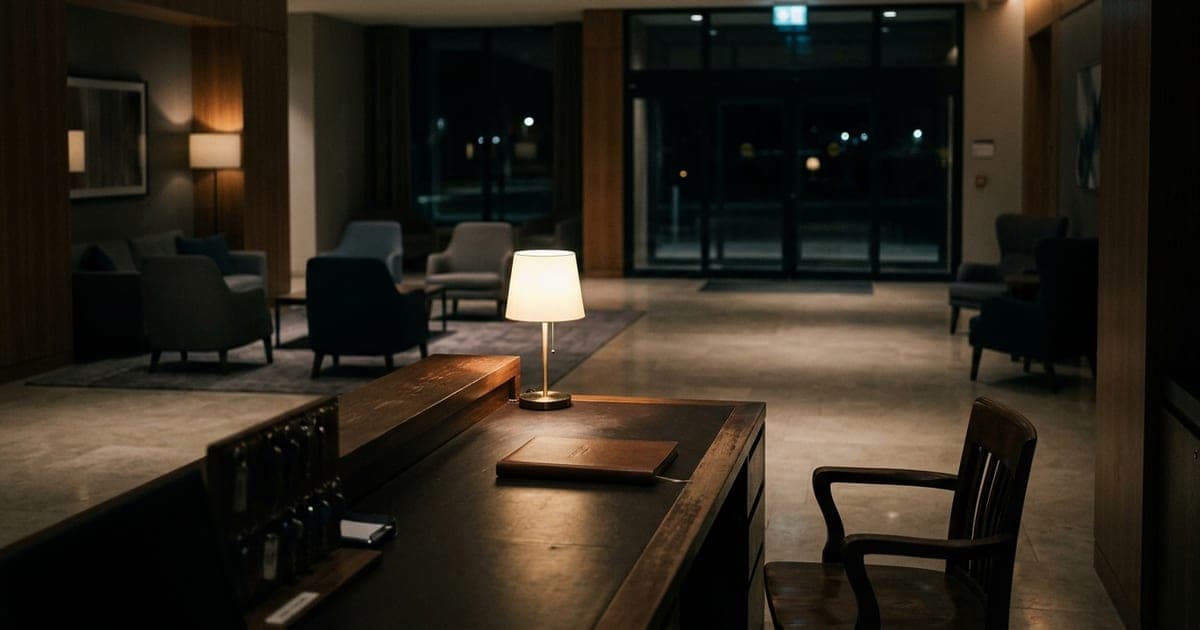
Every independent property reaches the same point. The phone rings at 11:40pm. The one person on shift is walking a late arrival to their room. By the time they get back, the caller has gone — and there is no way to know whether that was a guest asking about parking or someone trying to book three nights.
An answering service is how you stop guessing. This is what the options actually are, and where each one breaks.
The two kinds of service
Human answering services employ agents who pick up as your property. They follow a script you supply, take messages, and escalate by whatever rules you set. They have been serving hotels for decades.
AI receptionists answer with a voice model, working from information you upload. They handle practical questions directly, route requests to departments, and transfer to a human when the call needs one.
Both are sold as "24/7 cover". The differences that matter show up in the details.
Where each one is genuinely good
Human services are better at judgement. An upset guest, an ambiguous complaint, an unusual request that does not fit the script — a competent agent reads tone and adapts. If your calls skew emotional or complex, this is worth real money.
AI is better at the boring majority. Most hotel calls are the same eight questions: check-in time, parking, wifi, breakfast, pets, luggage, directions, late arrival. Answering those consistently at 2am, in seconds, without a monthly minimum, is exactly what it is good at. It also does not have a bad night.
Cost behaves differently too. A human service staffs your overnight window whether the phone rings twice or twenty times, and prices accordingly. Per-minute AI billing means a quiet night costs almost nothing. For a small property with low overnight volume, that difference is usually the deciding factor.
The failure mode nobody demos
Here is what goes wrong, and it goes wrong the same way for both:
The service confirms something it cannot see.
A caller asks whether you have a room on Friday. The agent or the AI, wanting to be helpful, says yes. Or quotes last season's rate. Or says a booking exists under a name it never checked. The guest arrives expecting a room you do not have.
That single failure costs more than a year of the service, because it produces a furious guest at your desk and a review that sits on your listing for eighteen months.
The root cause is always the same: the service has no live view of your availability. A script cannot know. A knowledge base cannot know. Only an integration with your property management system can know.
When you evaluate a service, ask one question first: can it see live availability in my PMS? If not, it can still be useful — but it is a message-taking service, and you should set it up to say so rather than to sound confident.
This is why a service that says "let me have the front desk confirm that and call you straight back" is more valuable than one that answers everything. Knowing what it does not know is the feature.
What to test before signing
Do not evaluate on the sales demo. Call the service yourself, as a guest would, and try these:
- 1
Ask something not in the script
"Is there a chemist near the hotel that's open now?" You are testing whether it improvises plausibly, admits it does not know, or invents an answer. Inventing is disqualifying.
- 2
Ask for a rate for a specific date
The right answer is either a real rate from live availability, or an offer to have someone confirm. A confident guess is the failure mode above, and you have just watched it happen.
- 3
Ask to speak to a person about a charge
Time it. Anything involving money or a complaint should reach a human quickly and without argument. If you have to insist, your guests will have to insist.
- 4
Call at 3am
Cover is a promise that only matters when it is inconvenient. Test it when it is inconvenient.
Where this lands for most small properties
If your overnight volume is genuinely low — a handful of calls a week — forwarding to a mobile is cheaper than any service, and works until the person carrying the phone stops tolerating it. That usually takes a few months.
If the phone rings enough that someone is losing sleep, or you know you are missing booking calls during check-in rush, a service pays for itself quickly. Start with whichever option covers the practical questions well and transfers cleanly, and only pay for human judgement on the calls that need it.
Dial Milo is our take on the AI side: it answers from your own house information, routes guest requests to the right department, and is deliberately built not to quote rates or confirm availability it cannot verify. If you want the wider comparison beyond hotels, we wrote that up in Dial Milo vs a traditional answering service.
For your business
One person on nights. Forty rooms. The phone doesn't care.
Milo picks up while your night manager is walking a guest to their room. She answers the practical questions from your own house information, passes guest requests to the right department, and puts anything involving money or a booking change straight through to the desk.
Get Milo answering your property lineFrequently asked questions
- What does a hotel answering service cost?
- Human services are usually billed per minute or per call, often with a monthly minimum, and overnight cover is the expensive part because it is staffed whether the phone rings or not. AI receptionists bill per minute of answered time with no minimum. Get quotes against your real overnight call volume rather than a package price — most small properties take far fewer overnight calls than they expect.
- Can an answering service take a booking?
- Only reliably if it can see live availability. A service working from a script cannot know whether room 12 is free on Friday, so it takes a message or quotes a rate it cannot honour. Ask specifically whether it integrates with your PMS; if it does not, treat booking as message-taking.
- Will guests know they are talking to an AI?
- Some will, most will not care for a practical question at midnight. What guests do notice and resent is being stuck — unable to reach a human about a charge or a complaint. Judge the handoff, not the voice.
- Is an answering service better than forwarding to my mobile?
- It depends on how often the phone actually rings out of hours. Forwarding is free and works at low volume; it fails because it makes someone permanently on call, which people stop tolerating after a few months. If your manager has quietly started ignoring the diverted phone, that is your answer.
Keep reading
Industries
Hotel phone systems: what small properties need
A practical guide to hotel phone systems for small properties: PBX vs cloud, what PMS integration is worth, and how to cover the front desk after hours.
ReadAnswering Service
Dial Milo vs. a traditional answering service
Human answering services charge per minute on a contract; Dial Milo is AI, 24/7, and pay-as-you-go. Where each one wins, with real cost math.
ReadAI Receptionist
What is an AI receptionist?
A plain-English explanation of what AI receptionists do, how they sound on the phone, and where they fit (or don't) in a small business.
Read