Answering Service
Landscaping answering service for route days
How a landscaping answering service covers route days and the spring quote surge: books weekly contracts and commercial bids for cents per answered call.
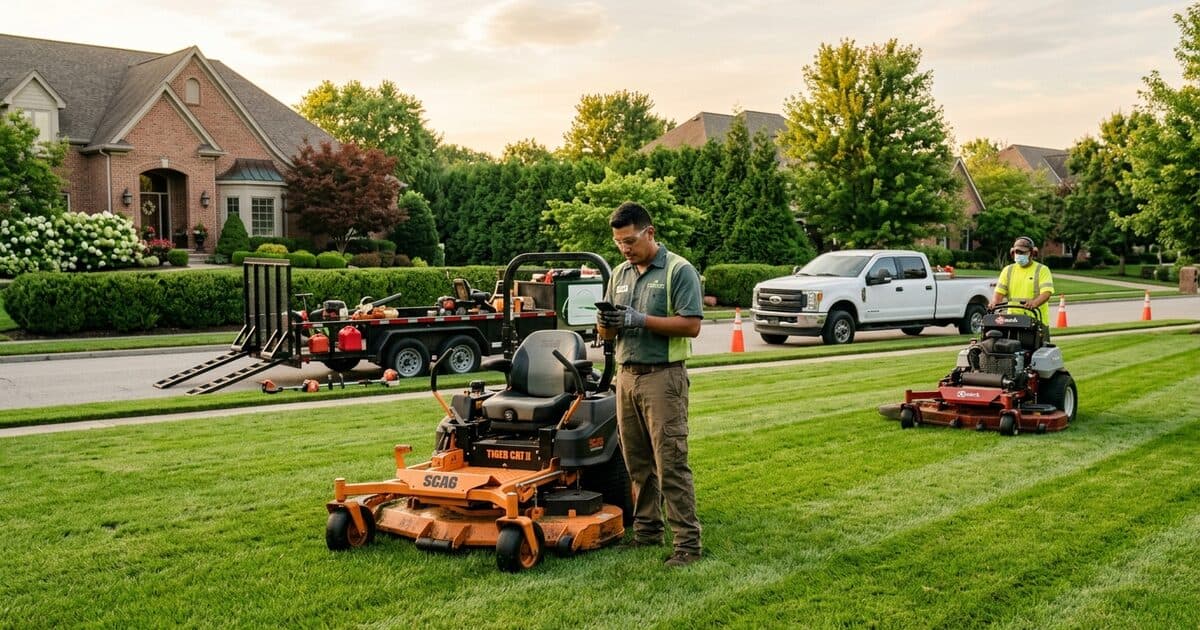
A landscaping answering service earns its keep on route days: the hours your crew is on mowers with engines running and nobody can hear the phone. That is exactly when the spring quote surge lands and when commercial and HOA inquiries come in, and commercial work goes to whoever answers first. The service has to capture a weekly-contract quote and a property manager's bid request properly, not just take messages, because those two call types are worth a season of revenue.
Landscaping's missed-call problem is mechanical. A mower deck is loud enough that crews wear hearing protection, and a trimmer is worse. Your people work eight to ten stops a day with engines running most of it, and the phone sits in the truck. The homeowner who wants her lawn cut weekly calls at 10:40 on a Tuesday, gets your voicemail, and rings the next name in the map results. She does not leave a message; the next company answered on the second ring. You never find out she existed.
The spring surge lands all at once
Every market has the same pattern: the first warm stretch, and within three weeks every homeowner who wants a service this season starts calling. They ring two or three companies and book the first one that answers. Whoever picks up in those weeks fills their route for the year.
A route slot is not a one-off job. A weekly residential mow typically runs $35–75 per visit over a season of 25–30 cuts, so one answered caller in April is often $1,000–2,000 of booked revenue, plus the bed work, mulch and fall cleanup that come with a regular customer. Miss that caller and the slot stays empty all season, because by June everyone has already signed with someone.
The same surge logic drives the HVAC answering service math during heat waves: a short window, a flood of callers, and the work goes to whoever answers.
Weekly contracts versus one-off cleanups
Not all quote calls are equal, and the intake should reflect that. A one-off spring cleanup is typically $150–400, done once, gone. A weekly-contract caller is the same phone call worth ten or twenty times as much over the season, and more again if they stay for years.
The details differ. For a recurring customer you need frequency, rough lot size, gates and dogs, and the service mix: mow and edge only, or beds, mulch and fertilizing on top. For a one-off you need the scope in their words and how soon they want it. A service that captures "called about lawn work" for both has told you nothing. This is the same recurring-route math as pest control: the value lives in the contract, not the first visit.
The commercial call that pays for the year
The most valuable call of the year usually comes from a property manager or HOA board member, mid-morning on a weekday, while your crew is on mowers. Commercial and HOA contracts typically run into the thousands per month, they renew for years, and the caller is working a shortlist with a bid deadline.
A call at 11:15am on a Tuesday, while your crew is three stops into the route:
Milo: Greenline Landscaping, this is Milo. How can I help?
Caller: Hi, I manage a townhome association in Fairview and we're collecting landscaping bids for next season.
Milo: Happy to help with that. So the right person calls you back with a proper proposal, can I take your name and the association?
Caller: Karen Doyle, Fairview Commons HOA.
Milo: Thanks, Karen. Roughly how large is the property, and what would you want covered: mowing only, or beds, mulch and seasonal color as well?
Caller: About six acres of common area. Full service, and our current contract ends in October. Bids are due by September 15th.
Milo: Got it: Fairview Commons, six acres of common area, full-service bid due September 15th, current contract ends in October. Best number to reach you directly?
Caller: This one, extension 4.
Milo: Perfect. I'm sending this to the owner now and he'll call you today with next steps.
Between stops you read a text with the name, acreage, scope, deadline and direct number, and call back sounding like a real operation. Notice what Milo did not do: quote a price for six acres of commercial work. That call comes from you.
Decide what the service may say about money before you turn it on. Upload your rate card or service list and it can answer "do you cover my area" and "what does a weekly mow start at" from your own documents. Anything it was not given, it must decline to quote rather than invent a number. An invented price on a commercial bid call either scares the caller off or bids against you. Test this before you trust it.
What to capture on every call
Every item on the intake changes how you respond:
- Name and callback number, read back to confirm
- Address and rough lot size, because a quarter-acre quotes nothing like two acres
- What they want and how often: weekly mow, one-time cleanup, mulch, full commercial grounds
- Access notes: gates, dogs, locked side yards
- For commercial callers: number of sites, scope, when the current contract ends, bid deadline, and the decision-maker's direct line
A service that captures all five lets you call back between stops and talk numbers. One that texts you "Karen, landscaping" has saved you a voicemail and nothing else.
What to test before signing
- 1
Call it as a spring quote shopper
“How much to get my lawn cut every week?” The right answer takes your address, lot size and number, and promises a callback. The wrong answer invents a price you never set.
- 2
Call it as a property manager
Give it an HOA bid request with a deadline and check what reaches you. If the summary is missing the scope, the deadline or a direct number, it failed the most valuable call type you get.
- 3
Call it mid-morning, three times in a row
The spring surge means simultaneous calls. If the second or third caller hears a busy tone or a queue, the service has the same problem as your voicemail.
- 4
Read the text you'd get between stops
Could you call back from the truck and sound informed? Name, address, frequency, lot size, all correct? Most services pass the voice test and fail this one.
What this costs in practice
Dial Milo answers every call at once, so surge weeks do not overwhelm it, and captures the intake details above instead of taking bare messages. It answers routine questions from your uploaded documents, in multiple languages, texts you a summary when a call matters, and refuses to quote prices it was not given. Billing is per second of answered call time, roughly 6¢ a minute on a US number, with no subscription, no minimum, and no charge for missed, blocked or spam calls.
The no-minimum billing matters more in landscaping than in most trades: your call volume is seasonal. You pay pay-as-you-go rates in April when the phone rings off the hook and close to nothing in December when it does not, instead of a human service's $250-plus monthly minimum all winter. Forward your existing number free, or take a dedicated one for $3 a month, and the $1 trial credit buys about 16 minutes of real answered calls to test with. Sixty answered calls in a busy month at ninety seconds each: about $5.50. One weekly-contract customer covers that for years. The full pricing-model comparison is in answering service cost.
For your business
Don't lose another $2,000 emergency to voicemail.
Milo picks up while you're on a roof, under a sink, or driving between jobs. She screens emergency vs scheduled, captures the address and callback number, and texts you the moment something's on fire — literally or otherwise.
Get Milo answering your trades lineFrequently asked questions
- Why do landscapers miss so many calls?
- Because the work is loud and outdoors. A crew runs eight to ten stops a day with mowers and trimmers going most of it, and nobody can hear a phone over a mower deck. The calls cluster mid-morning on weekdays, which is exactly when every truck is rolling, so the phone sits unanswered in the cab until the route is done.
- Can an answering service handle the spring surge of quote requests?
- That is the scenario it handles best. An AI service answers every call at once, so the tenth caller of the morning gets the same response as the first, while your human competitors' callers hit voicemail. Since spring quote callers work down a shortlist and book whoever answers, answering everything in those few weeks is most of the year's growth.
- What should a landscaping answering service capture on a commercial or HOA inquiry?
- The decision-maker's name and direct callback number, the number of properties or sites, rough acreage, the scope they want priced, when the current contract ends, and the bid deadline. Those details are the difference between calling back with a serious proposal and calling back blind. A message that says 'someone called about a contract' wastes the most valuable call of your year.
- What does a lawn care answering service cost in the off-season?
- With a human service, the same monthly minimum you pay in May, which is why many landscapers cancel and re-sign every year. Pay-as-you-go AI services bill per answered minute with no minimum, so a quiet December costs close to nothing and a busy April costs a few dollars. At Dial Milo's published ~6¢/min, sixty 90-second calls in a month is about $5.50.
- Can it tell a weekly-contract caller from a one-off cleanup?
- Yes, if it asks the right intake questions: what they want done, how often, and roughly how big the property is. A weekly mow over a full season is worth many times a one-time cleanup, so the two should not be handled the same way. Check the summaries it sends you and confirm the frequency and lot size are captured every time.
Keep reading
Answering Service
Pest control answering service for panic calls
How a pest control answering service turns wasp-nest panic calls into booked jobs while you're driving between sites, for cents per answered call.
ReadIndustries
HVAC answering service: emergency call triage
How an HVAC answering service separates a no-heat emergency from a routine call, and why one missed $400 emergency job costs more than a year of the service.
ReadAnswering Service
Answering service cost: what you'll actually pay
What answering services really cost: a receptionist at $3,000–4,000 a month, traditional plans from $250 plus overages, or pay-as-you-go AI at cents a minute.
Read